
Da Nang in 5 Days — Diving, Scooters and Saigon Traffic
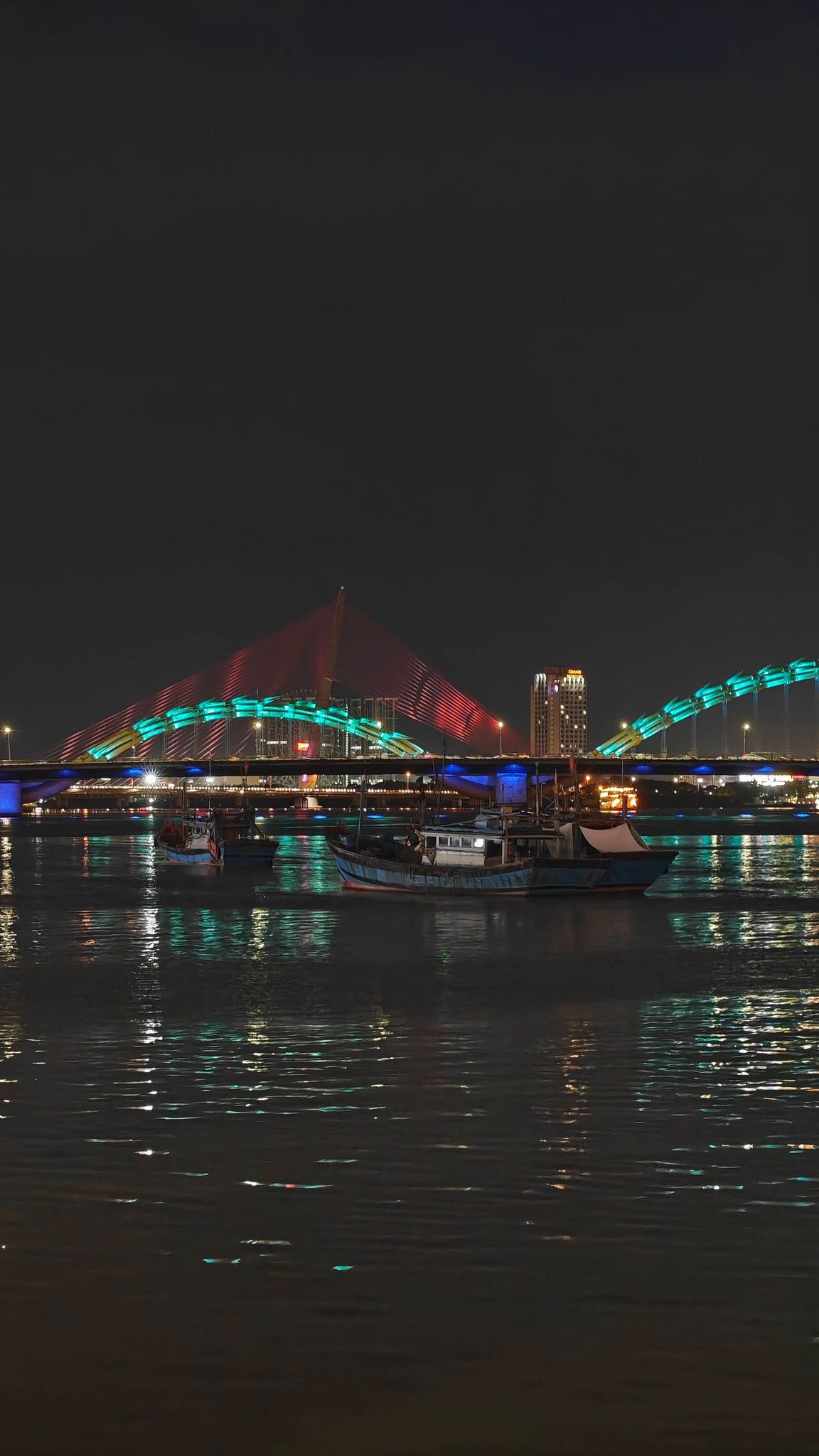
We landed in Vietnam at 00:40, straight after a 16-hour layover in Beijing that somehow included the Great Wall of China. Vietnam became my 81st country, and for the first two days all we wanted from it was sleep. Then came 5 days in Da Nang: my girlfriend's first scuba dive, an electric scooter on roads that are 80% scooters, and a dragon-shaped bridge I crossed again and again.
This was the first real stop of our month-long trip across Asia — 9 countries in 4 weeks.
Vietnam is a long, narrow country of about 102 million people on the eastern edge of mainland Southeast Asia. Da Nang sits in the middle of its "S", and it's bigger than older maps suggest: in July 2025 the city absorbed Quang Nam province, so Hoi An is now technically part of Da Nang, and the city has about 3.9 million people. Fun fact: Vietnam is the world's second-largest coffee producer, and about 95% of its coffee is robusta.
Ho Chi Minh City traffic and a walking street at 10 pm
Two flights and more than 12 hours in the air. Air China fed us well and the seats were comfortable, but we still arrived exhausted. We'd booked a hotel near the airport for about $34 a night, and the room had a bathtub right in it. It looked much better than the price suggested, and yes, we used it.

Most of those two days went to sleep. When we finally went into the center of Ho Chi Minh City, the taxi took about 50 minutes and cost around $5. Traffic jams are so normal here that our driver spent the ride watching AI-generated videos on his phone. For other rides we used Grab.
In the evening we ended up by the Saigon River, on a wide pedestrian street full of lights and people — Nguyen Hue Boulevard, 670 meters between City Hall and the river, pedestrian since 2015. Some people were watching their favorite celebrities on big screens, others were just walking or eating. Finding a restaurant that still served food at 10 pm turned out to be a small quest. We did it.

Da Nang: sea view, weak breakfast
An evening flight took us from Ho Chi Minh City to Da Nang in 1 h 20 min, landing at 22:00 on a Saturday. Our first meal in Da Nang was a delivered pizza. Not very Vietnamese, but it was late.
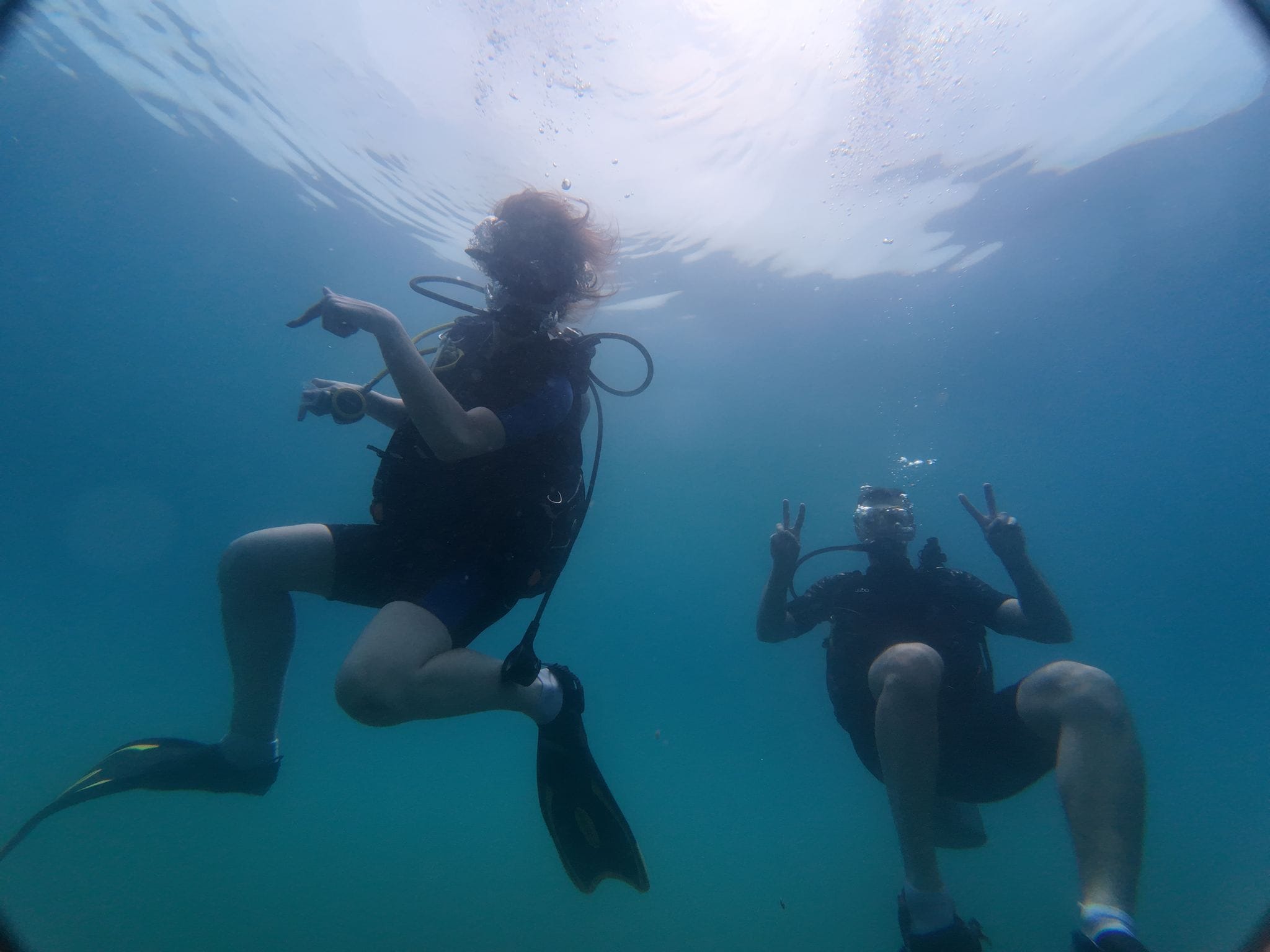
For 5 nights we had a sea-view room for about $53 a night. Waking up to the beach through the window was the best part of the hotel. The breakfast was the worst part — thankfully, the only meal included.
Scuba diving in Da Nang for beginners
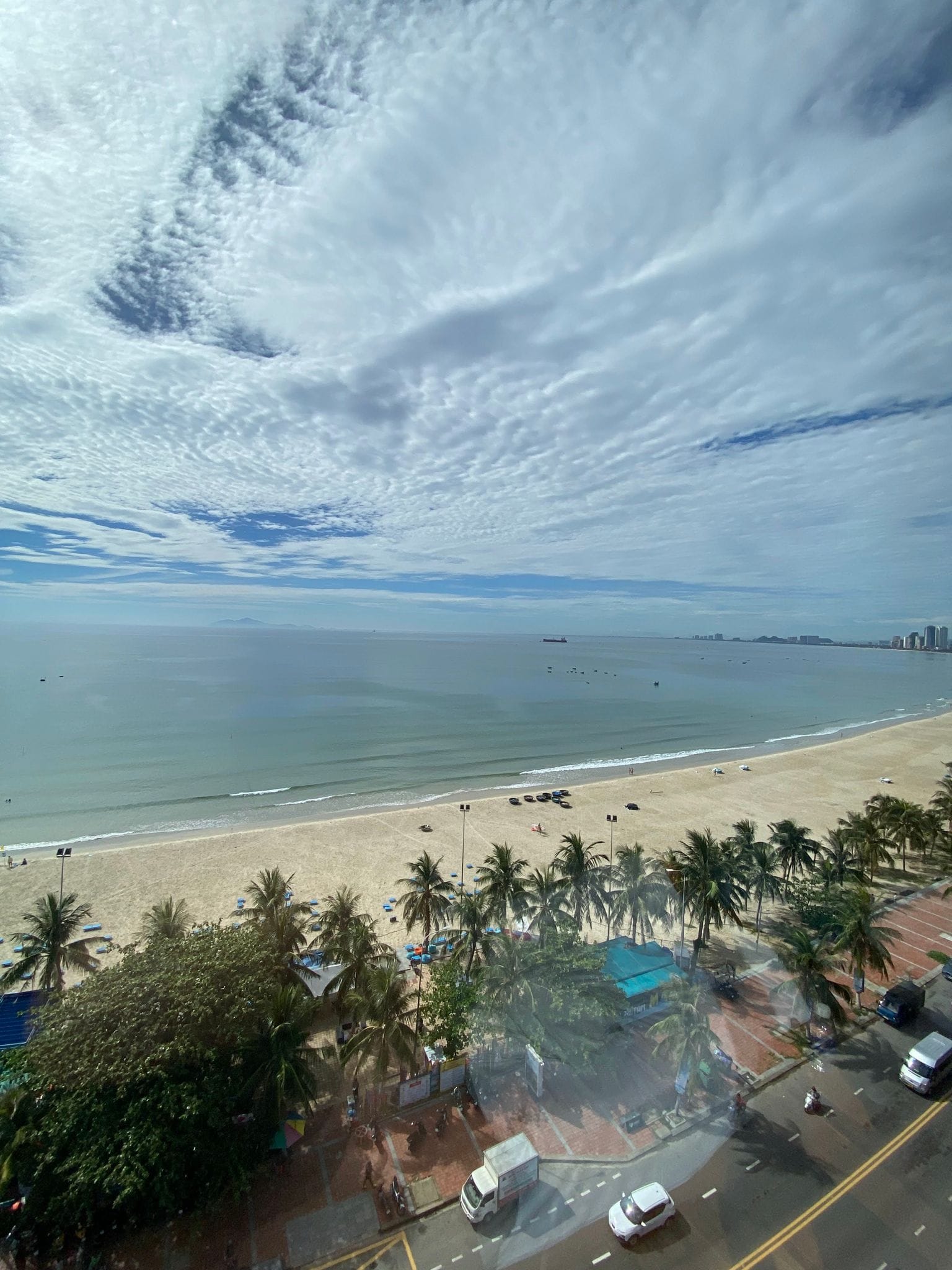
We booked an introductory dive at Bãi Đá beach, with an operator we found on Google Maps — the kind where you don't need any certificate. For my girlfriend it was her first dive ever; for me, the 3rd or 4th. We had two instructors for the two of us and stayed in shallow water, 5–10 meters deep, for almost an hour. It was relaxed and flexible, and we surfaced without even using all the air in our tanks. We both liked it.
The price was about $120–130 for the two of us, including an extra fee for a GoPro. If it's someone's first dive, pay for the camera.
Intro programs like PADI Discover Scuba Diving go no deeper than 12 meters and don't certify you, so nobody expects you to know anything. We were also lucky with the timing: Da Nang's dry season runs January–August, and September–December is the wet and typhoon season.
Renting a scooter in Da Nang
My European driving licence isn't valid in Vietnam on its own, so I rented an electric scooter instead. It does about 50 km/h and feels like a normal scooter.
The rule, as far as I can tell: under Vietnam's Law on Road Traffic Order and Safety (No. 36/2024/QH15, in force since January 1, 2025), a moped is a two- or three-wheeler with a design speed of up to 50 km/h and, if electric, a motor of up to 4 kW. From age 16 you can ride one without a licence. Anything stronger is a motorcycle and needs an A1 licence — for a tourist, that means a home licence plus an International Driving Permit issued under the 1968 Vienna Convention. I'm not a lawyer, and I'm not sure every rental shop knows the exact specs of its bikes.
Before you ride off on a "no licence needed" electric scooter, ask for its top speed and motor power. It only counts as a licence-free moped in Vietnam at 50 km/h and 4 kW or less.
Da Nang's roads are wide, which is both good and bad. Good: there's a lot of space. Bad: about 80% of that space is scooters, and they move chaotically. Some riders clearly don't know the rules, and it spreads — once a few people improvise, everyone does. You get used to it by riding slowly and turning carefully.
Buying an iPhone in Da Nang
A few days before flying out of Warsaw I drowned my phone, so the first week of this trip ran on an old iPhone 11. That backup didn't hold up either: its screen had been degrading for a while, and it died completely the day before I replaced it. For that last day, the only way to use it was a Telegram video call from my girlfriend's phone, with mine sharing its own screen back into the call, so I could see what was on it and guess where to tap.
In Da Nang I replaced it with an iPhone 17 Pro Max and left the box sealed — Vietnam refunds part of the VAT on goods tourists take out of the country, and an unopened box makes that conversation at the airport much shorter. Collecting the refund turned out to be its own small adventure: the VAT Refund booth in the departure lobby was closed, and it took a couple of guards just to point us toward the right place. The actual stamp happened right at the security checkpoint, and an official came looking for us right after we'd passed through — it looks like not many tourists bother claiming this. The refund itself came back in local currency, and net of it, I paid roughly the US price for the phone. Five days later I was complaining on Threads that the new phone couldn't survive 12 hours in Low Power Mode.
Things to do in Da Nang
Most of our 5 days went to exploring the city itself.
Dragon Bridge. A 666-meter bridge over the Han River with a golden dragon running along it, opened in 2013. I crossed it many times. At 9 pm on Fridays, Saturdays, Sundays and holidays, the dragon breathes fire for about 2 minutes and then water for 3 more, according to Da Nang's tourism portal. We landed on a Saturday less than an hour after it ended, and never lined up the timing again for the rest of the week. The river itself had some of the nicest views of the city.
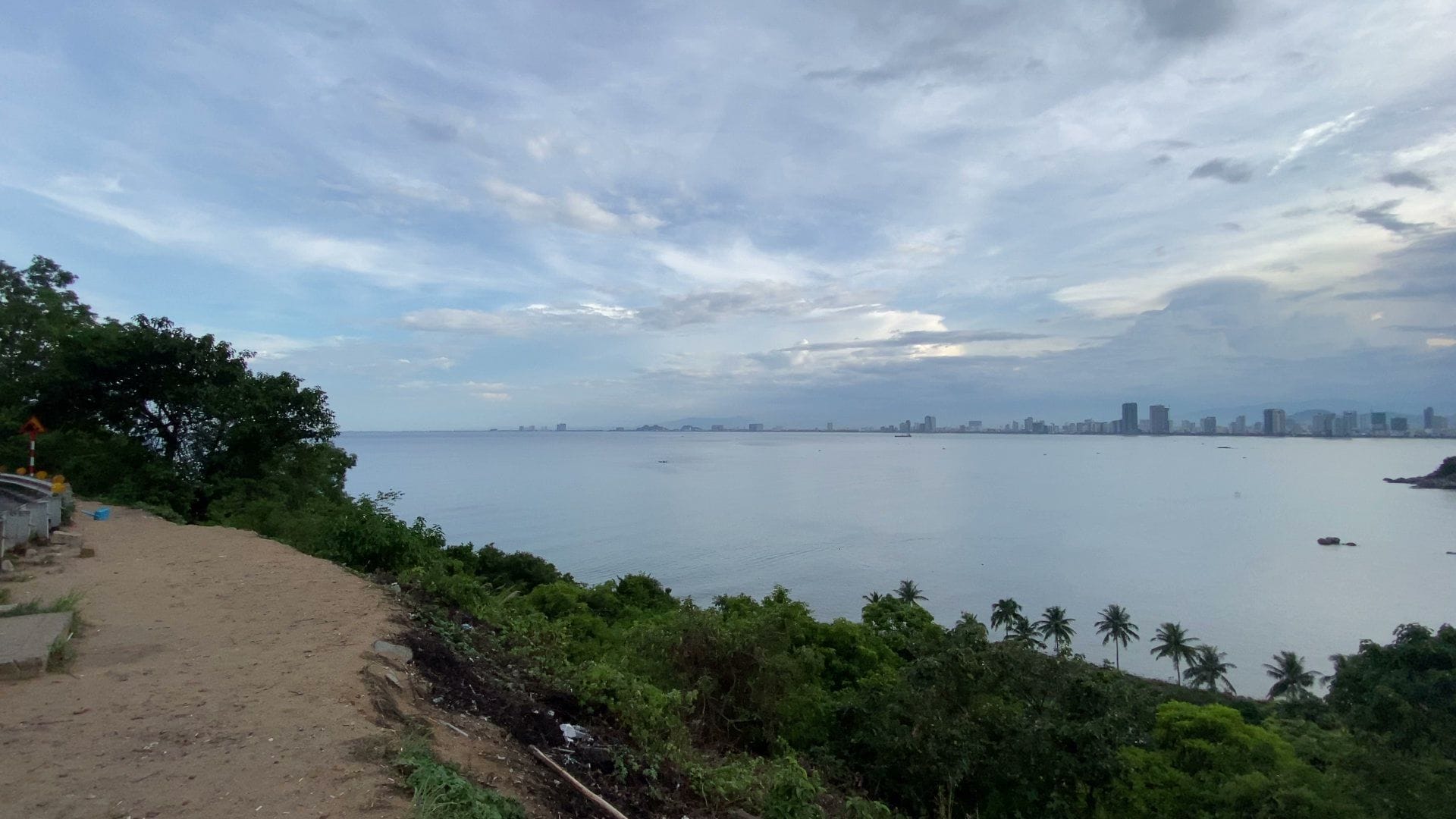
Lady Buddha on Son Tra. The 67-meter Lady Buddha at Linh Ung Pagoda stands on the Son Tra peninsula, north-east of the center, facing the sea. We got there in the evening, and a man on the road told us it was already closed. We went a bit further up the hill anyway, and the view was worth it.
Marble Mountains. About 8 km south of the center, a cluster of rocky hills sticks out of an otherwise flat city — the Marble Mountains, five hills named after the five elements. Only Thuy Son is open to visitors, with caves, pagodas and a nice lookout at the very top.
Temples. A lot of them, very beautiful and quite unique to Vietnam. Between them: a few shops, restaurants and some random Vietnamese chocolate that got its own Threads post.
Practical Notes
- Visa (Ukrainian passport): Ukrainians aren't visa-exempt. Vietnam's e-visa is open to all nationalities: up to 90 days, $25 single entry or $50 multiple entry. Apply only on the official evisa.gov.vn portal — we both applied online and were approved in about 3 days.
- Getting around: Grab works in both cities. The taxi into central Ho Chi Minh City took 50 minutes and cost about $5, mostly traffic.
- Scooters: licence-free only for electric mopeds (50 km/h, 4 kW). Anything stronger needs a motorcycle licence, which for tourists means a home licence plus a 1968-Convention IDP.
- Dragon Bridge show: free, 9 pm on Fridays, Saturdays, Sundays and holidays. Plan a weekend evening around it.
- Lady Buddha: go in daylight. In the evening we were told it was closed, although the official portal says it's open all day — I'm not sure what happened there.
- Marble Mountains: 40,000 VND for Thuy Son, plus 15,000 VND for the elevator one way (2025 prices from Da Nang's tourism portal).
- Diving: an intro dive with 2 instructors for two was $120–130 including a GoPro. Go in the dry season (January–August).
- Budget: a sea-view room in Da Nang was about $53 a night; the airport hotel with a bathtub in Ho Chi Minh City was about $34.
On August 6 we flew to Bangkok to start a 3-day sprint to Laos through Thailand. Vietnam got one more night from us on the way home almost three weeks later: an apartment next to the Ho Chi Minh City airport, sleep only, and a 5:10 am flight back to Beijing. By now, Ho Chi Minh City has seen us asleep far more than awake :)