
Climbing Mt. Fuji: Subashiri Up, Yoshida Down (2026 Guide)
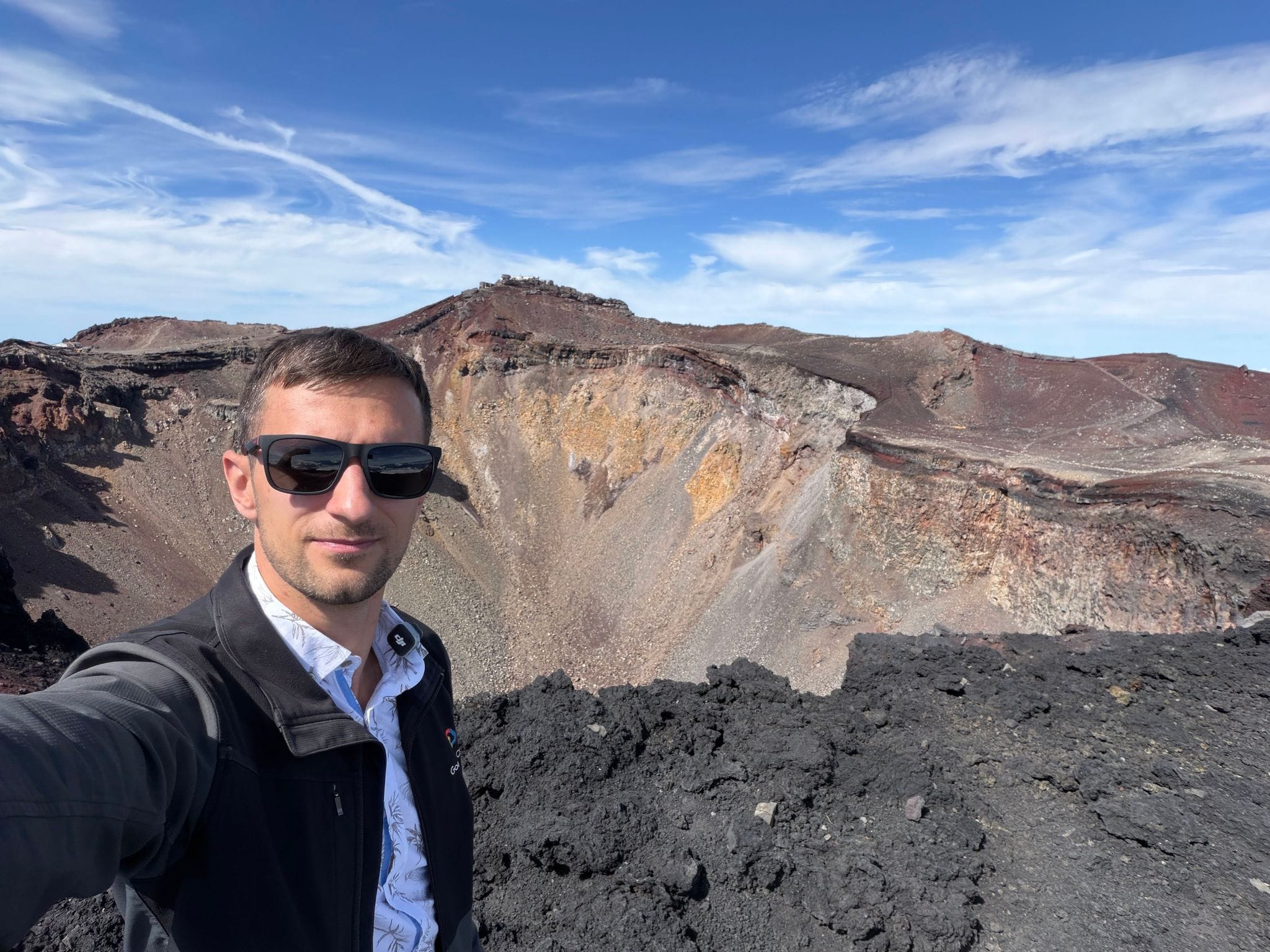
We climbed Mt. Fuji in August 2026 the "wrong" way around: up the steep, rocky Subashiri trail and down the easy Yoshida trail. Two days, one night in a mountain hut at about 3,000 m, one 2 am start — and the top highlight of my four-week Asia trip. Below: getting from Kyoto to the trail, the 2026 fees and registration, gear rental, the hut, and the one junction on the way down you really shouldn't miss.
Mt. Fuji is 3,776 m tall, last erupted in 1707, and has been a UNESCO World Heritage cultural site since 2013. Four trails lead to the top: three start in Shizuoka Prefecture (Subashiri, Gotemba, Fujinomiya) and one in Yamanashi (Yoshida). Fun fact: every trail is split into ten "stations", the summit is the 10th, and almost everyone starts at the 5th, where the roads end.
We were also lucky with timing. Fuji is officially open for climbing only about two months a year. In 2026, the Subashiri and Yoshida trails opened on July 1 and Gotemba and Fujinomiya on July 10, all closing on September 10 (official Mt. Fuji climbing site). Our Japan week landed right in the middle of it.
Kyoto to Mt. Fuji: Shinkansen and bus to the Subashiri 5th Station
Our last evening in Kyoto ended with the Gozan no Okuribi fires, so we went to bed early. The Tokaido Shinkansen left Kyoto at 6:25 am and reached Shizuoka at 8:10. From there, local trains carried us on to Gotemba, the gateway town for the Subashiri trail — paid with a Suica card, that blue IC card with the penguin on it. It works on trains and buses almost everywhere in Japan, and topping it up with about ¥5,000 back in Kyoto covered roughly all our local transport for the whole Japan leg.
From Gotemba Station, a seasonal bus climbs to the Subashiri 5th Station at 1,970 m. In 2026 it runs July 1 – September 10, takes about an hour and costs ¥1,780 one way or ¥2,500 return, with no seat reservations (japan-guide timetable). Another common way from Kyoto is the Shinkansen to Mishima, then a local bus or train to Gotemba.
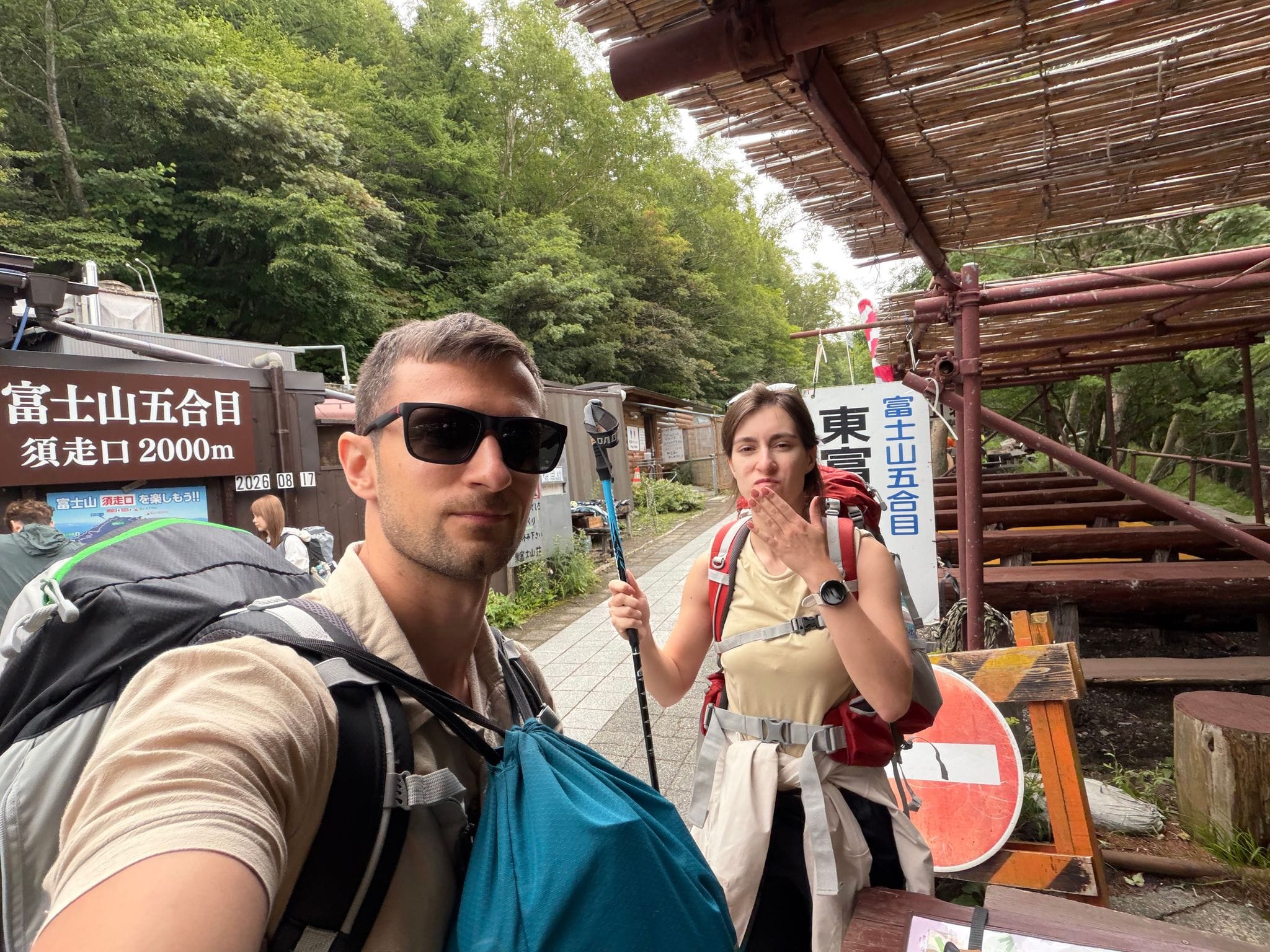
Mt. Fuji climbing fee 2026 and registration
On the Shizuoka side (Subashiri, Gotemba, Fujinomiya), you pay ¥4,000 per person, once, during mandatory online pre-registration in the Shizuoka Prefecture FUJI NAVI app. The app also makes you finish a short e-learning course on rules and manners and pass a quiz before it issues your entry pass: a QR code that staff scan at the trailhead, giving you a wristband in return. We did everything online before the climb, which I'd recommend — do it on hotel Wi-Fi, not at the 5th Station.
Shizuoka has no daily cap on climbers. The rule that matters is the clock: if you enter the trail between 2 pm and 3 am, you must be staying at a mountain hut, and the app doesn't book huts for you. It's aimed at "bullet climbing" — the no-sleep overnight dash for the sunrise. Climbing that fast leaves no time to adjust to the altitude, and the official site's health guide explains what that does to you: altitude sickness and hypothermia.
The Yoshida trail in Yamanashi runs a separate system: its own ¥4,000 fee, a cap of 4,000 climbers per day and a gate that closes to climbers from 2 pm to 3 am. If you plan to come down that way like we did, read the Yamanashi notice carefully. It states: "Even if you start climbing from a gate other than the 5th station gate, you will be required to pay the hiking fee if you use the descending trail."
In our case, the only checks were on the way up: a control right at the start of the Subashiri trail where we showed our registration, plus a quick check-in screen, and another check-in at the mountain hut. Coming down the Yoshida side, nobody asked for the Yamanashi fee or checked anything at all — that's just what happened to us, not a guarantee it works that way for everyone.
Mt. Fuji gear rental: delivered to the 5th Station
We arrived after two and a half weeks in hot countries with no mountain gear at all, and it gets properly cold near the top. So we rented everything from LaMont (not sponsored), and they delivered it to their counter at the Subashiri 5th Station.
Check-in was a bit funny: you register on a small screen at the counter, and then the local staff help you pick sizes. Each of us took the 7-piece full set — rain jacket and pants, a 35 L backpack, hiking boots, gaiters, a headlamp and a trekking pole. On the way down, we simply handed everything back at LaMont's return counter at the Yoshida trail 5th Station. A different station from pickup, no problem.
We paid ¥39,184 for two, including insurance and round-trip shipping — about ¥19,600, or $130, per person. It's not the cheapest option. Picking the same set up at a LaMont store costs less than delivery (¥13,800 vs ¥15,800 for one night, before the ¥792 insurance), and returning somewhere other than where you picked up adds a round-trip shipping fee. We had no spare time to go hunting for better deals in a city, so for our schedule the convenience was worth it.
Climbing Mt. Fuji via the Subashiri trail
The Subashiri trail starts in a forest, which gives you shade for the first part. Then the trees end and it turns into steep volcanic scree and rock. That's where it got hard.
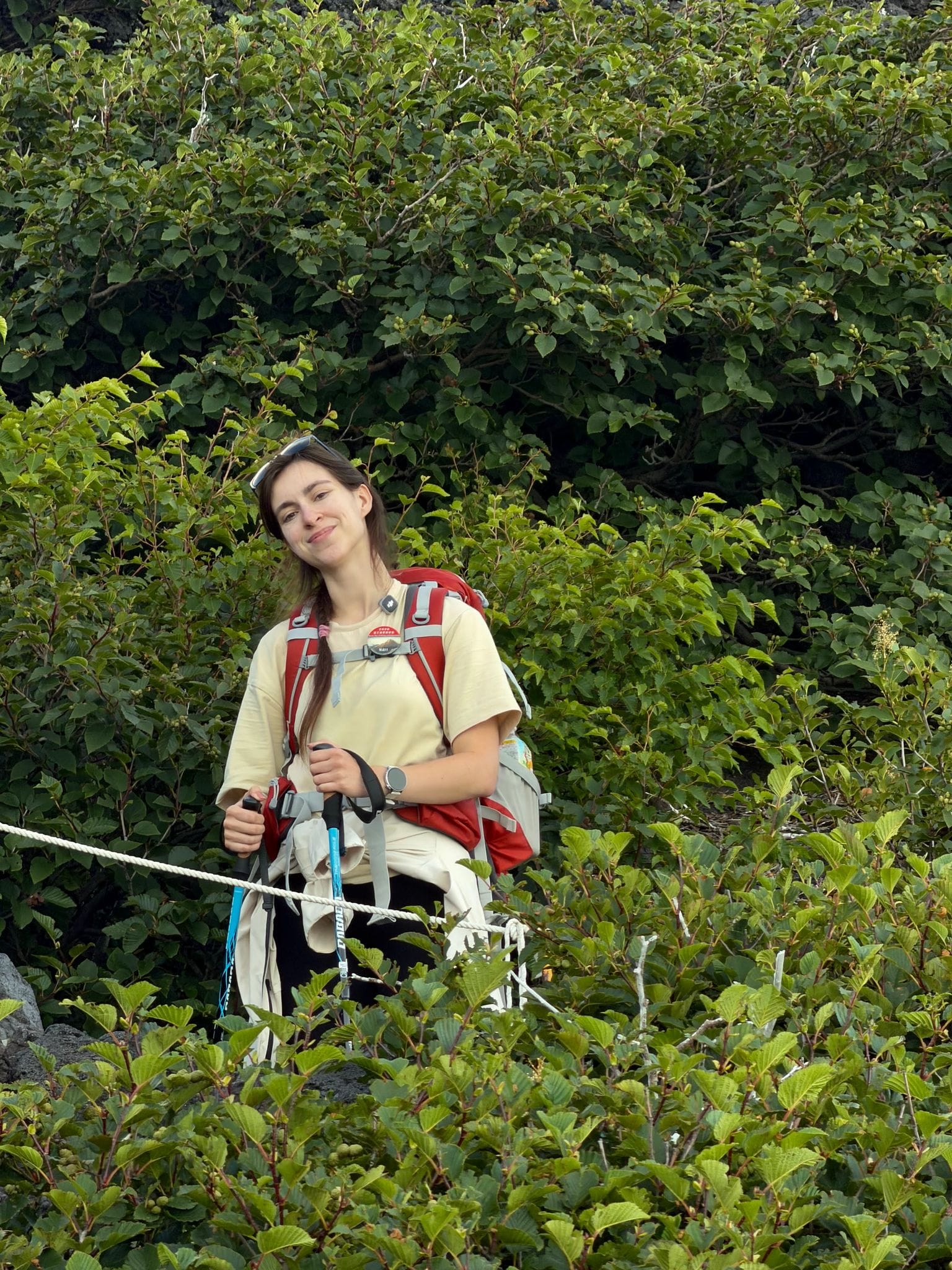
It took us about 5 hours to get from the 5th Station at 1,970 m to our hut at about 3,000 m — roughly 1,000 m of elevation gain. The official model plan budgets about 5 h 20 min from the 5th Station to a 7th Station hut, so we were right on schedule. That day I posted on Threads: "I'm halfway through climbing Mt. Fuji in Japan, 2.5 weeks into my full-time Asia trip."
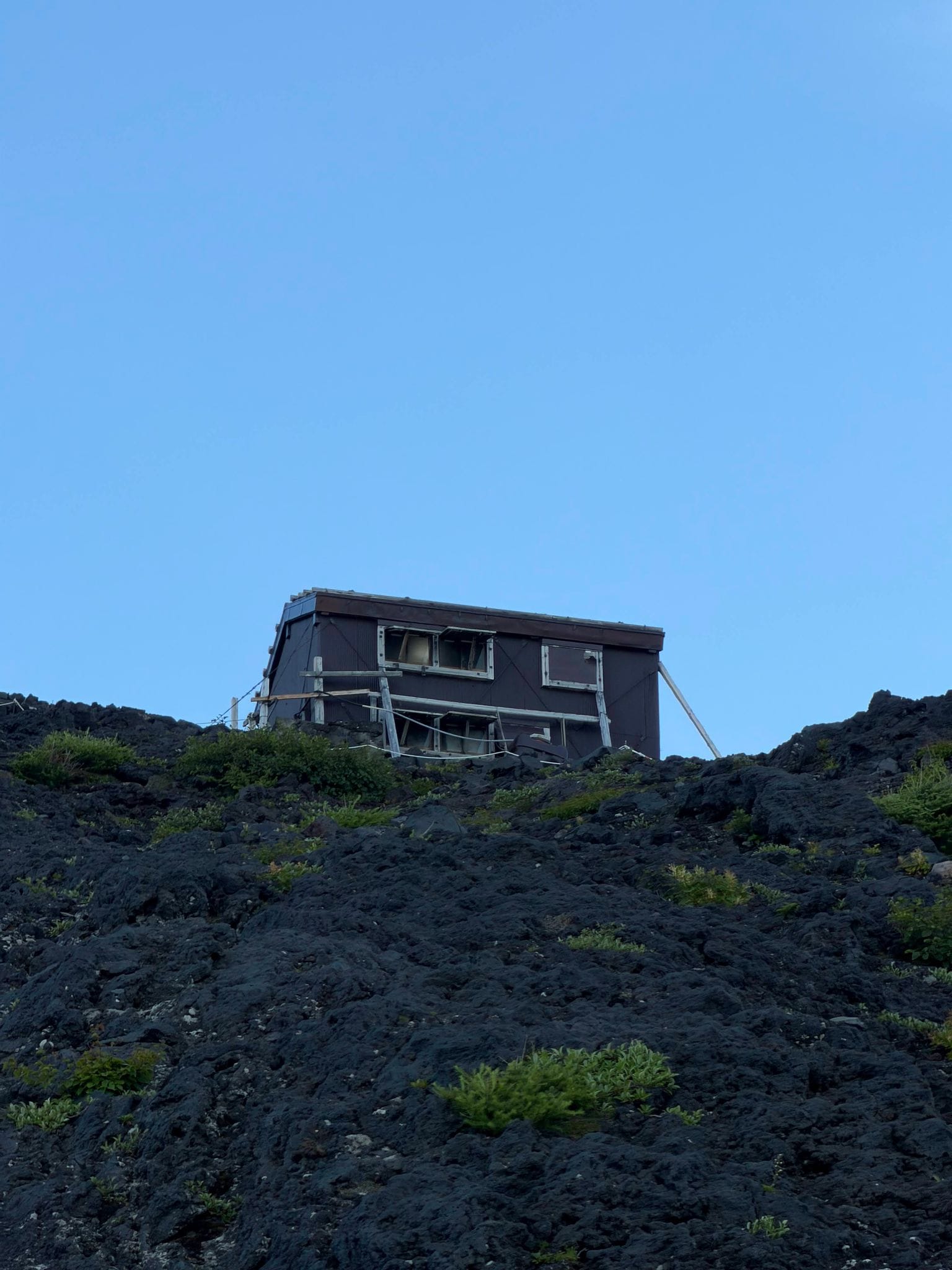
Sleeping in a Mt. Fuji mountain hut: Taiyokan at the 7th Station
Taiyokan sits at the Subashiri trail's 7th Station, about 3,000 m up. It's basically barracks: long bunk platforms, a futon and blankets each, strangers sleeping almost face to face, and a few thin dividers for privacy. Dinner was included. Outside it was cold and windy.
And thank god it exists. On a mountain, your idea of comfort changes very quickly. We slept about six hours.
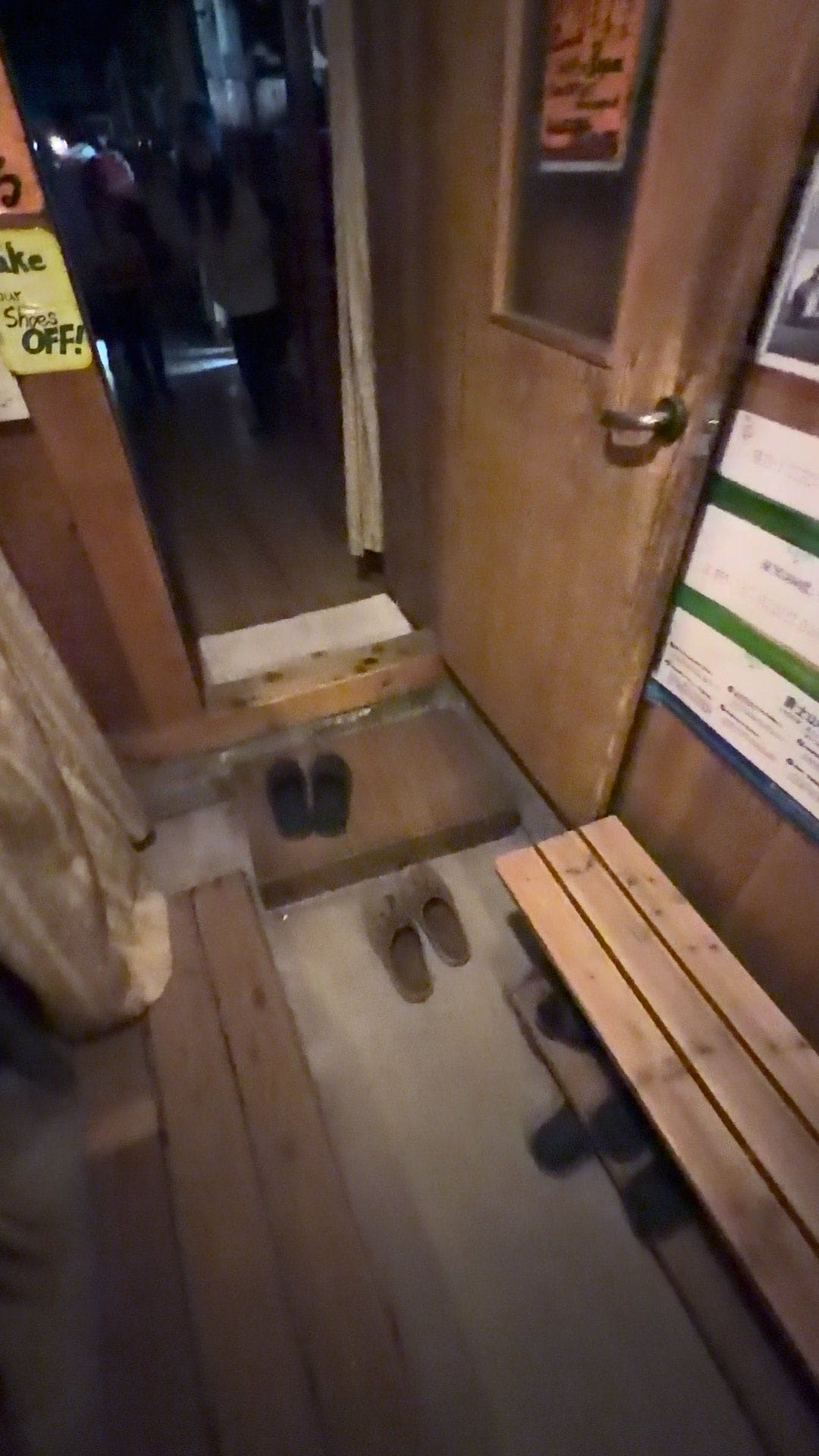
We paid about $105 per person, booked through japanmountainhuts.com. The hut's own website (in Japanese) lists ¥13,750 with dinner and ¥16,500 with dinner and breakfast; English-language booking services charge more, around ¥19,500. Book early either way.
Sunrise on Mt. Fuji and the summit
We left the hut at 2 am with headlamps on. Sunrise came around 5 am, while we were still a bit below the summit. It didn't matter at all: the Subashiri trail faces east, so you'd see the sunrise from the hut too, and it would be just as beautiful.
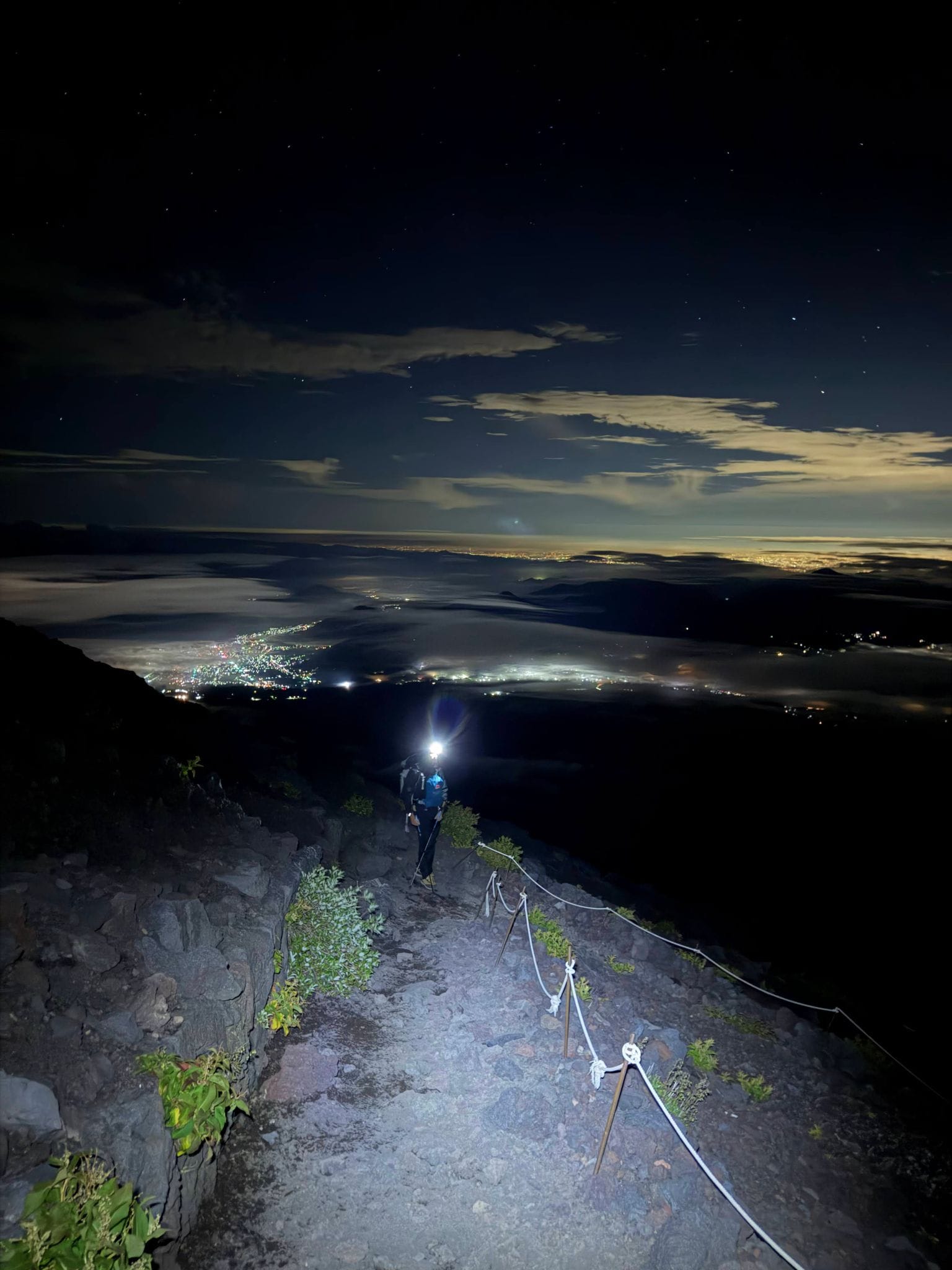
Then about two more hours to the top. Above the 8th Station the Subashiri trail merges with the Yoshida trail, the most popular route on the mountain, and Japan's tourism organization warns that this last section gets slow and congested around sunrise. The final stretch was the hardest part of the climb for me. My girlfriend walked it more or less fine.
At the top, there's the crater and — slightly surreal at 3,776 m — shops. I also had a small surprise planned for the summit: I proposed, and she said yes.
Descending Mt. Fuji via the Yoshida trail
As planned, we went down the Yoshida side. On the Yoshida and Subashiri trails, the way down is a separate path from the way up, and the Yoshida descent is a wide gravel track that zig-zags down the slope. No rocks, no scrambling — just five hours of the same zig-zag, over and over. Super boring, if I'm honest.
Halfway down, my fiancée and I had the same thought: why did we climb up the hard way? The answer is that this path is built for people going down, not up.
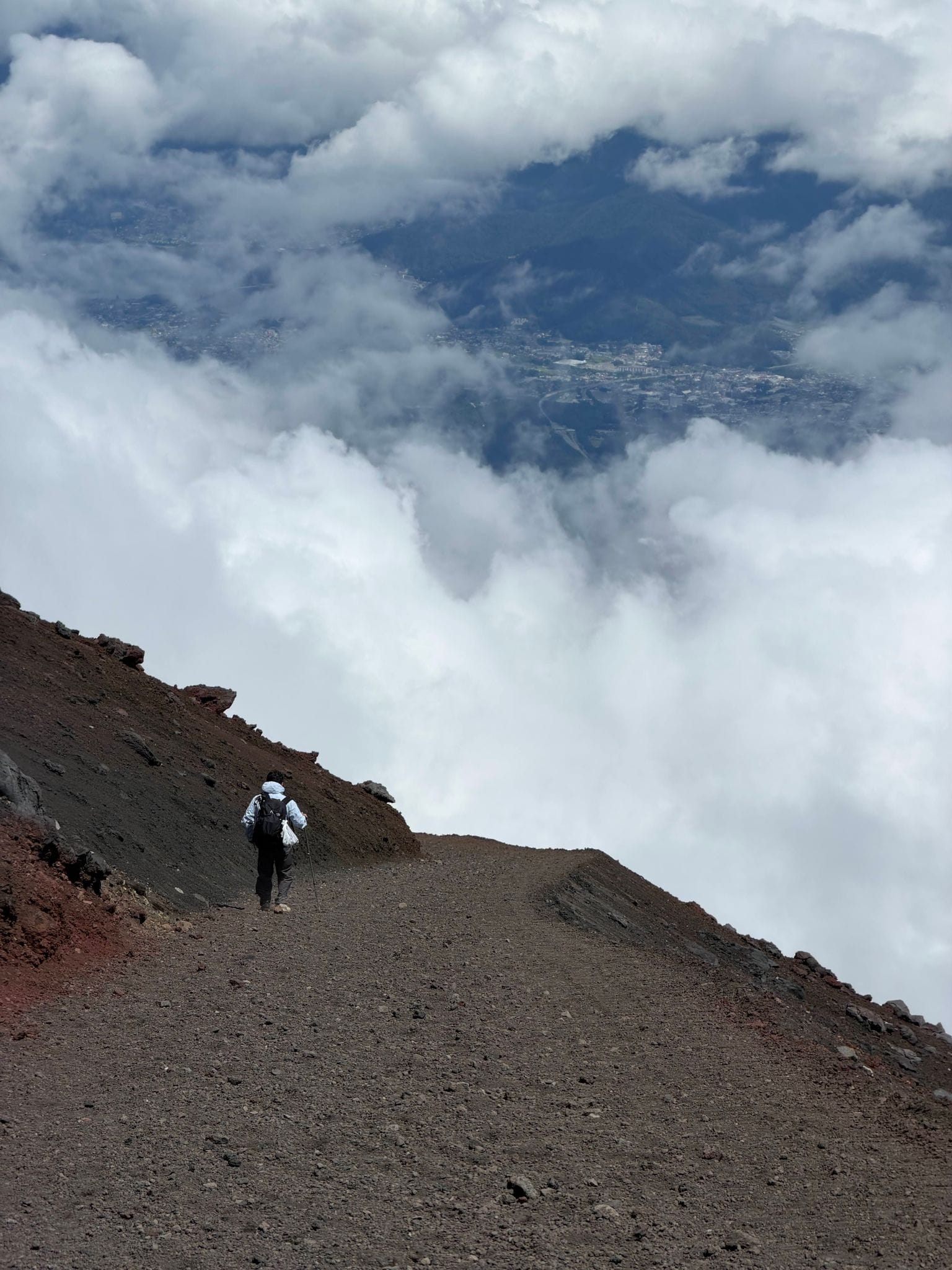
One thing to watch: the Yoshida and Subashiri descent trails split near the 8th Station, at the Shita-Edoya hut. The official site calls it the point where the most people take the wrong trail, and once you're past the sign about 100 m below the fork, the only way back is to climb up again. For Yoshida, follow the yellow signs (JNTO's Yoshida trail guide has the details). Take the wrong one and you come down at a different 5th Station, far by road from your bus and your rental return.
At the Yoshida 5th Station (2,300 m) we returned our gear, around 1–2 pm, made our way down to Fujisan Station in Fujiyoshida, and had dinner at a restaurant right next to the LaMont shop before catching the 6:29 pm highway bus to Busta Shinjuku in Tokyo for ¥2,000 each. All seats on Fujikyu's highway buses are reserved, so book ahead.
That evening we were in Tokyo. The rest of that story is in my Kyoto and Tokyo post.
Practical Notes
- Choosing a route: Subashiri is steeper and rockier but starts in a forest. Yoshida is the most popular route, with nearly three times the climbers of the others, and its descent is the easy one we took. If you go up Subashiri, you can also come down its own sandy descent (the sunabashiri section) — wear gaiters. Whichever you pick, watch for the split near the 8th Station.
- Fees and registration (2026): ¥4,000 on the Shizuoka trails through the FUJI NAVI app (e-learning, quiz, QR code); a separate ¥4,000 and a 4,000-per-day cap on Yoshida. Register the day before, on Wi-Fi.
- Mountain hut: book in advance. Without a reservation you can't start up between 2 pm and 3 am. It isn't comfortable, but it beats a no-sleep bullet climb.
- Gear: boots, rain gear, warm layers, gloves and a headlamp are the minimum. LaMont delivery to the 5th Station cost us about ¥19,600 per person with insurance and shipping; picking up at one of their stores is cheaper.
- Altitude sickness: the summit is at 3,776 m. A night at the hut and a slow pace help; read the official health guide before you go.
- Cash: carry yen. Toilets at the huts cost ¥200–300.
- IC card: get a Suica — the blue card with the penguin on it — before you leave. It works on trains and buses almost everywhere in Japan; about ¥5,000 on ours covered roughly all our local transport for the whole Japan leg.
- Timing: the 2026 season ran July 1 (Subashiri, Yoshida) or July 10 (Gotemba, Fujinomiya) to September 10. In mid-August, sunrise was around 5 am, and leaving the 7th Station at 2 am got us close to the top in time.
- Buses: Gotemba Station to Subashiri 5th Station is ¥1,780 one way, no reservations; the highway bus from Fujisan Station to Busta Shinjuku needs a reservation.
Two weeks later I posted about it on Instagram as "day on Mt. Fuji", then corrected myself: "two days". It became my most-liked post of the whole trip. I still can't decide whether I'd take the hard way up again. Probably yes.