
Kuwait City in Two Days: a Street Interview and My First Arabic Coffee
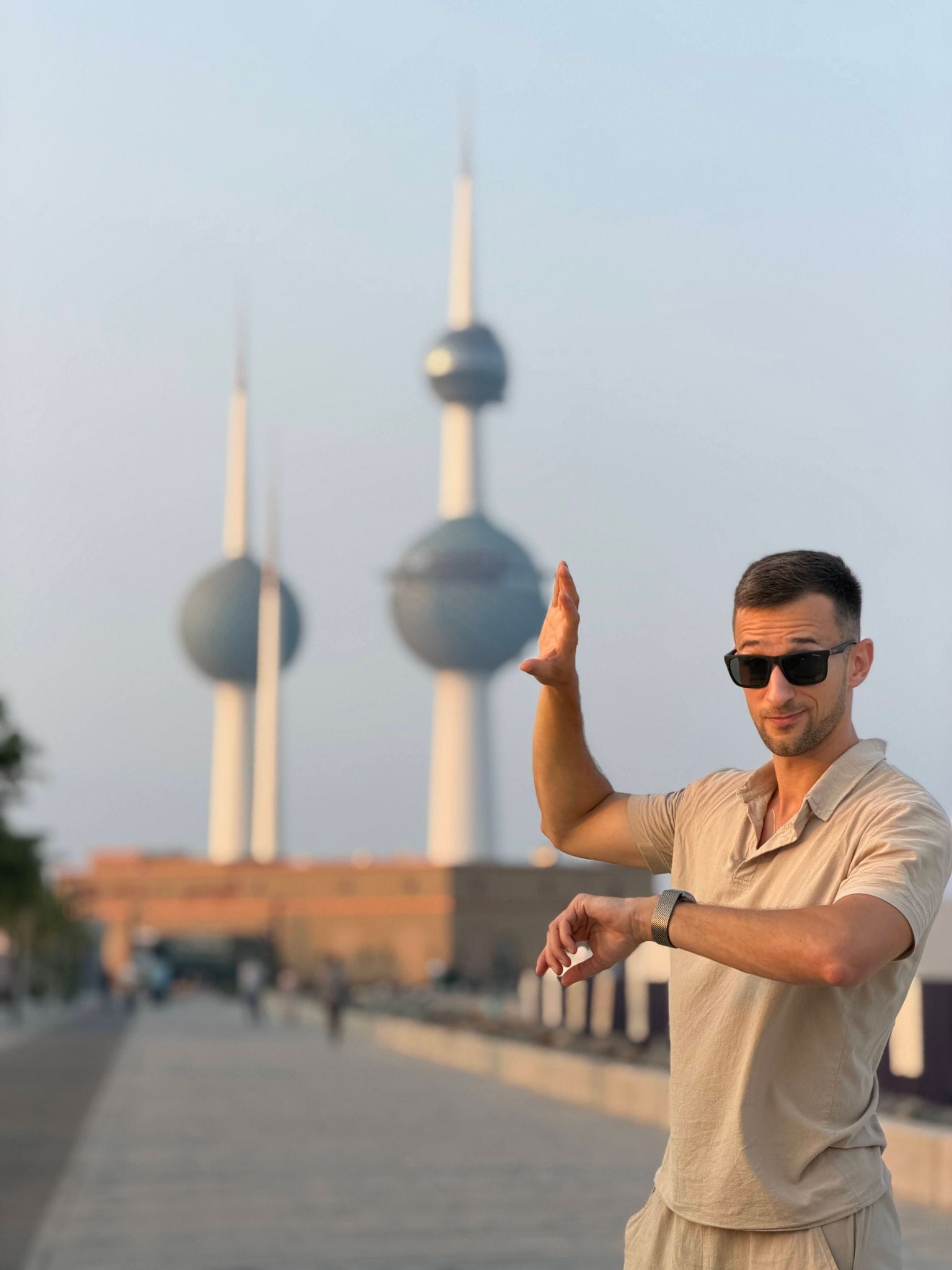
I was walking along the beach towards Kuwait Towers when a local guy asked if he could film a short interview with me: who I am, why I came, what I find interesting about Kuwait. I said yes. The interview took a few minutes, and then we spent about six more hours together — Kuwait's history, the old souq, dinner, and a drink I now call my favorite.
Kuwait became my 88th country at 02:40 on October 16, when the Jazeera Airways flight from Baku landed. I had two nights in Kuwait City and flew on to Bahrain on the afternoon of the 17th — the second stop of the Road to 90 trip.
Kuwait has about 5.3 million people, and only about 30% of them are Kuwaiti citizens. The other 70% are expats, and the largest group by far is from India: about 1.06 million people, one in five of everyone in the country. Egyptians and Bangladeshis come next. Fun fact: the Kuwaiti dinar is the most valuable currency unit in the world, about $3.2 for one KD.
The Corniche and Kuwait Towers
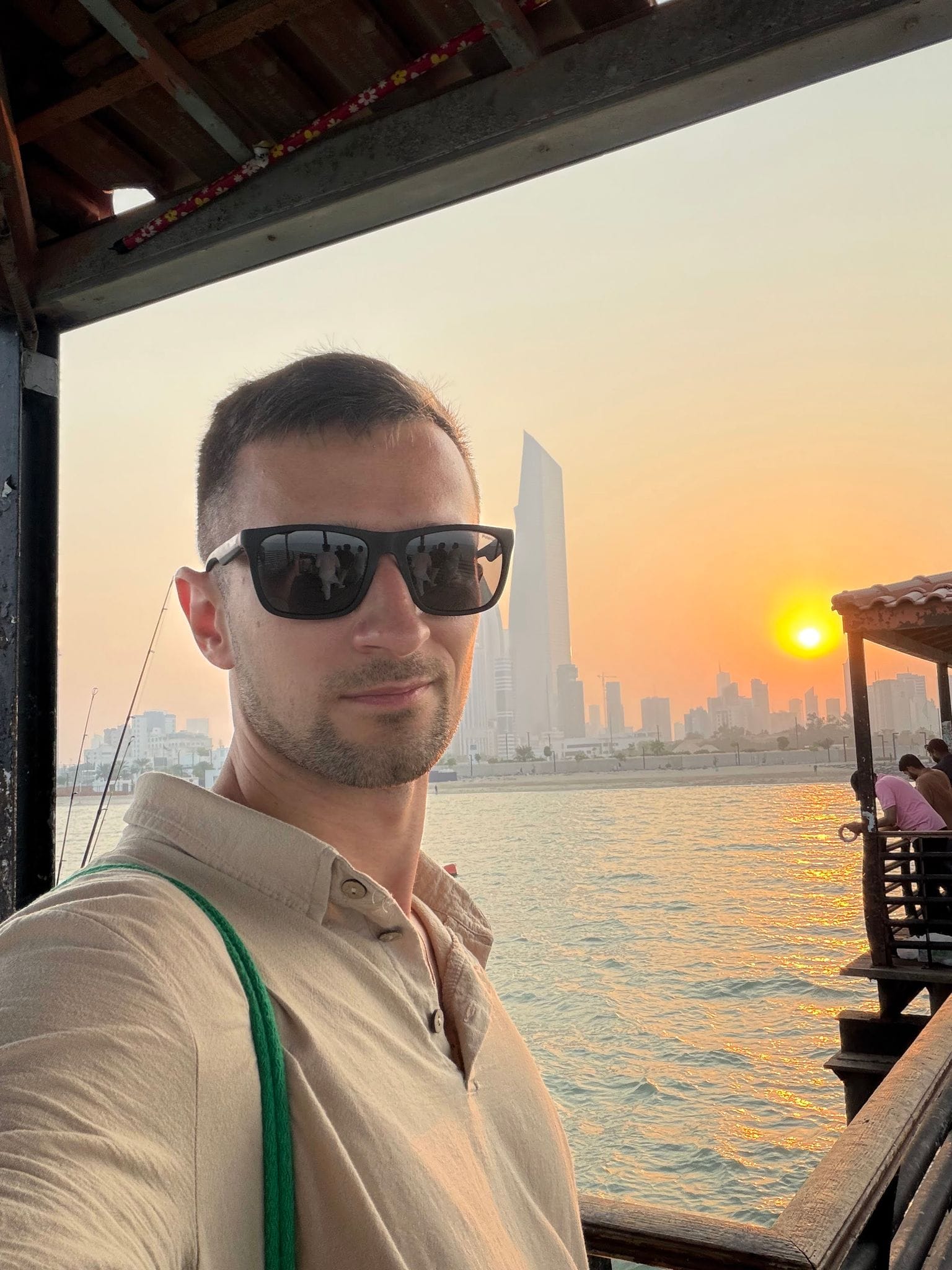
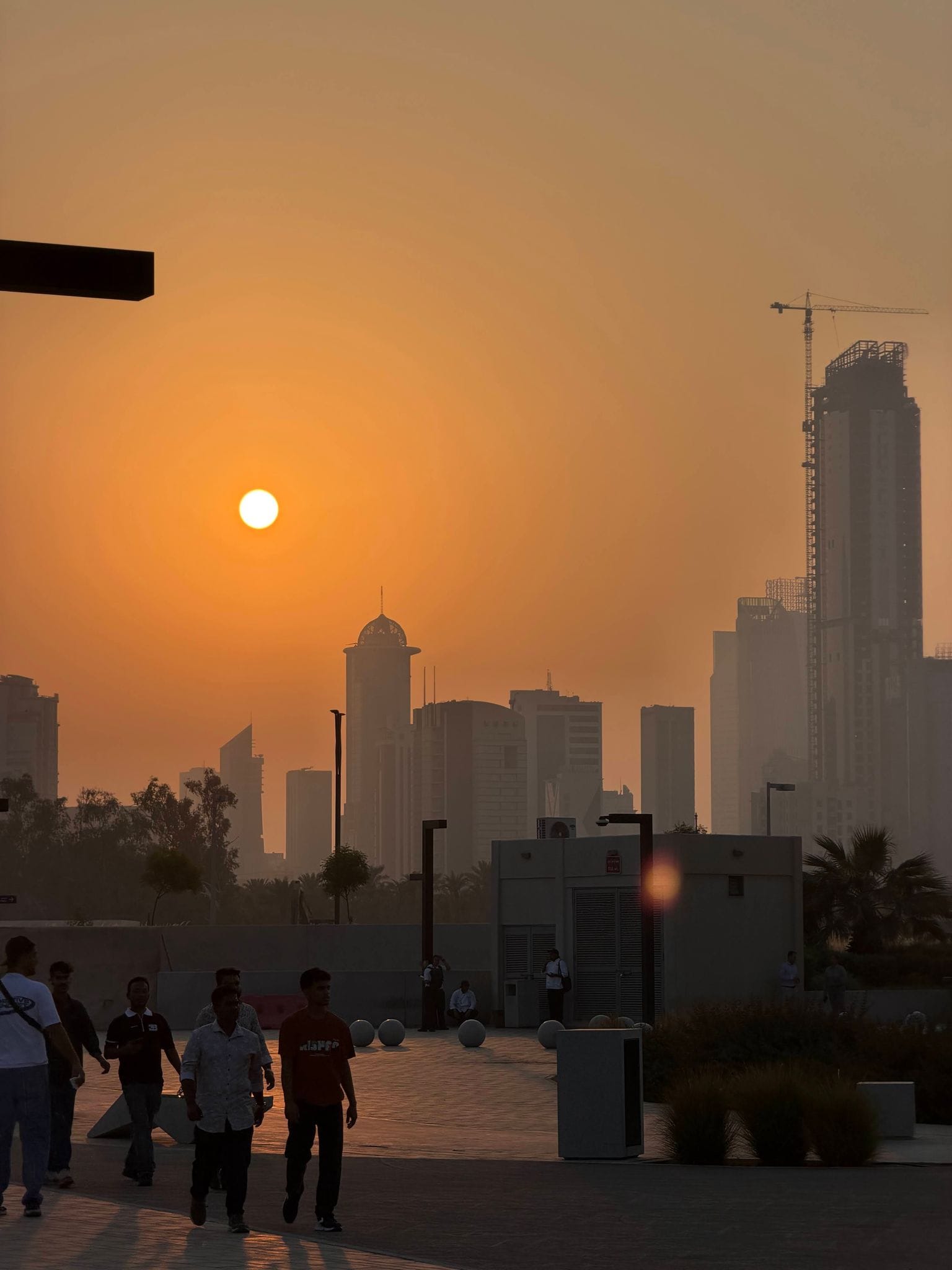
After a short night, I went out in the afternoon. It was a Friday, which in Kuwait is the weekend: people work Sunday to Thursday. I walked along the Corniche, the long seafront road on the Gulf, and stayed by the water until the sun went down behind the skyline.
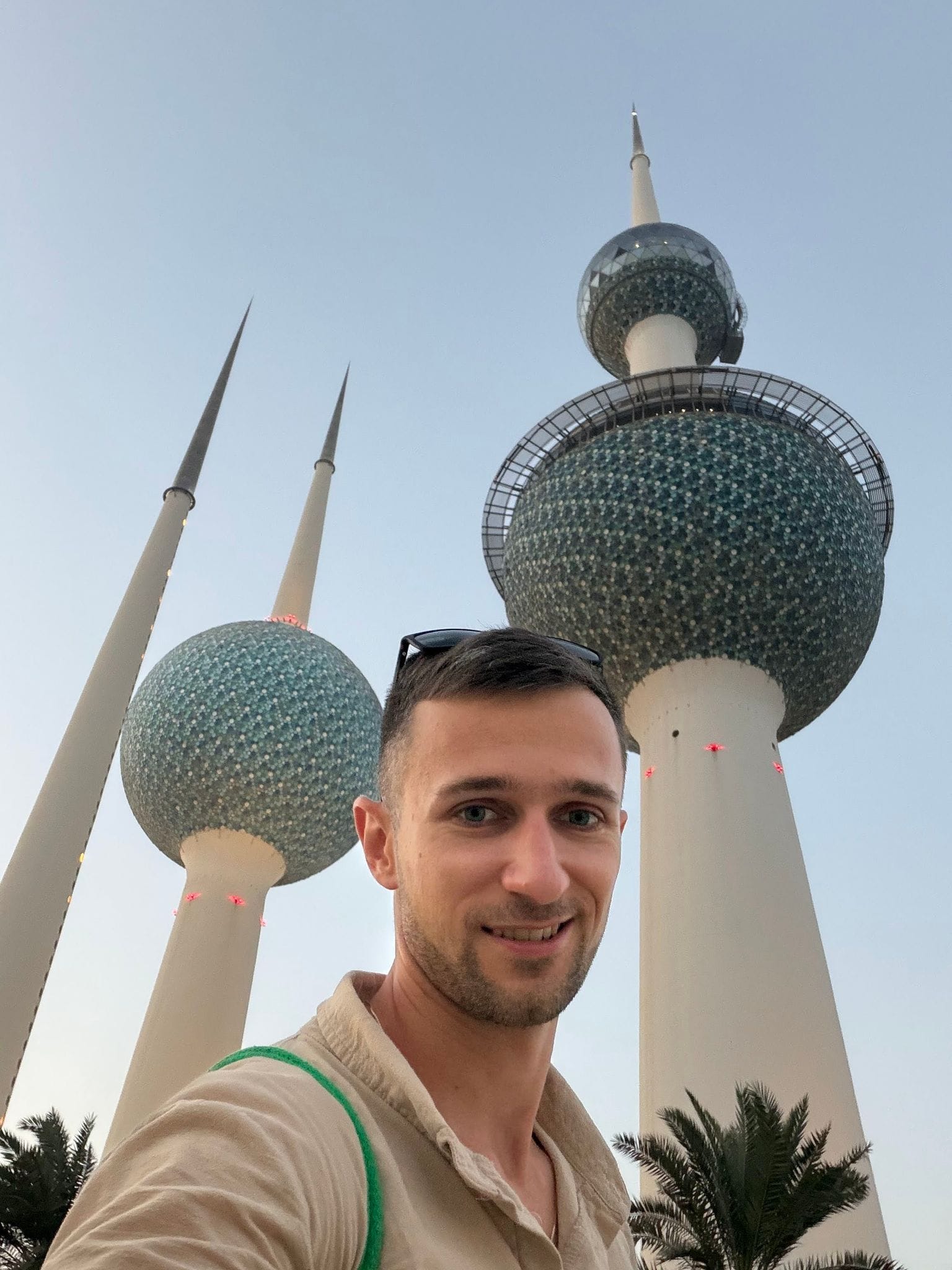
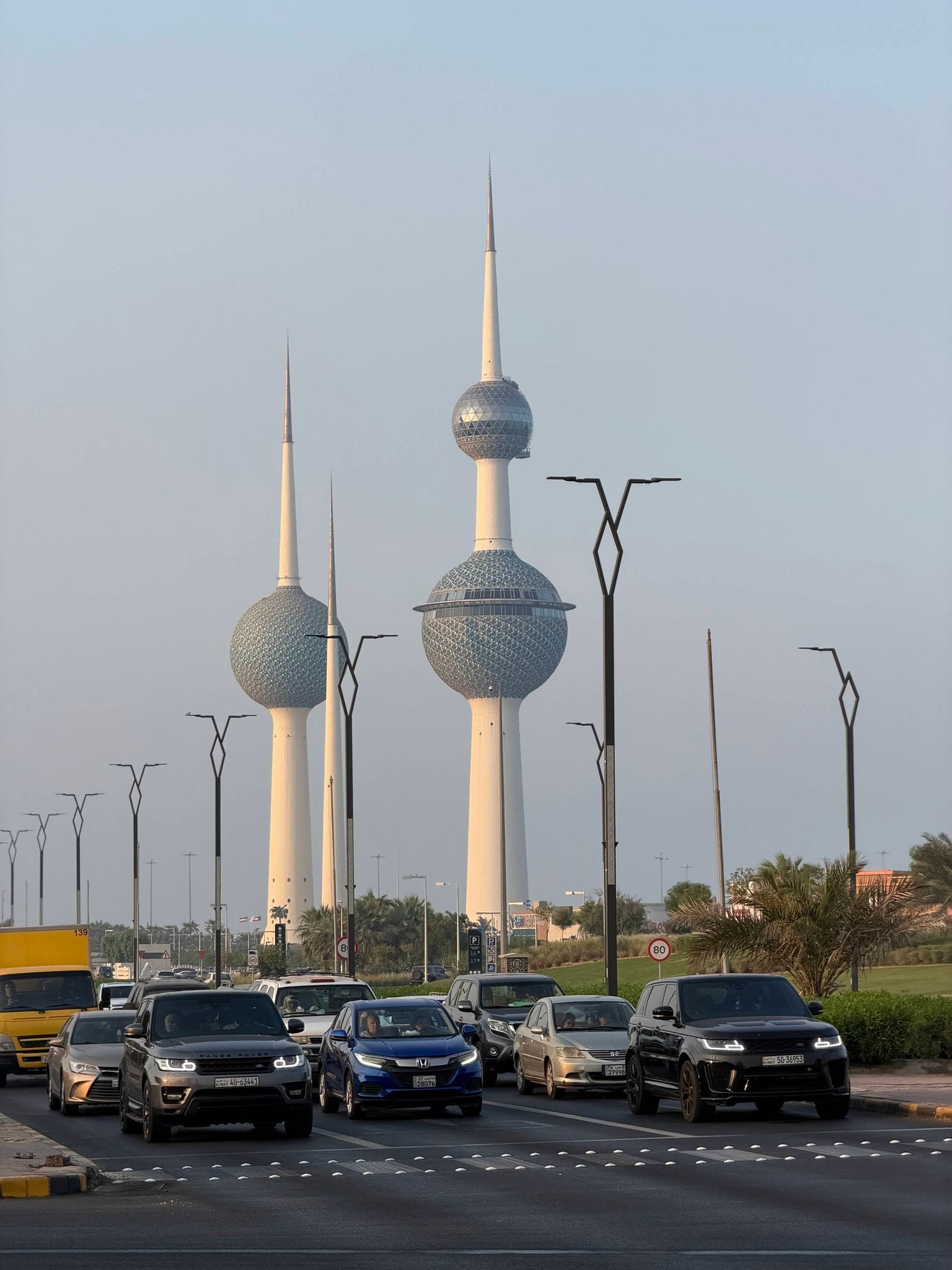
The walk ends at Kuwait Towers, the symbol of the country. They opened on March 1, 1979, the tallest is 187 m, and they aren't just decoration: they're part of Kuwait's water tower system.
A street interview I didn't plan
The guy with the camera was Ahmed, @a7med.bu.s7ab on Instagram — he films street interviews and has over 11,000 followers. His routine, as he told me later: after work he goes out and looks for tourists to interview. That's harder than it sounds. A European tourist is a rare sight in Kuwait, and even he said that seeing someone like me there was unusual.
He posted the interview the next day as a collab with my account.
Watch it: our collab reel with Ahmed, the street interview near Kuwait Towers (Instagram, October 17, 2026).
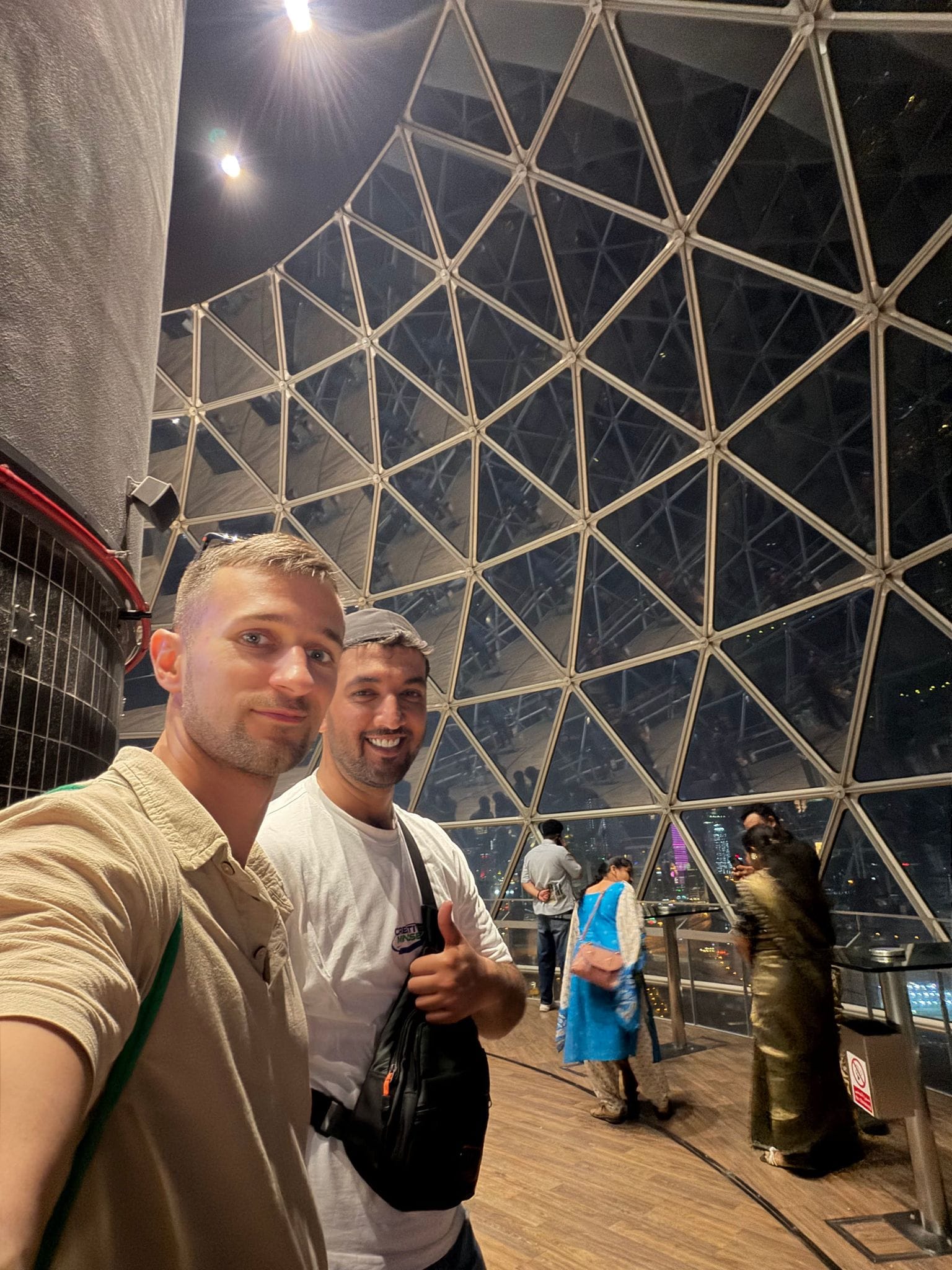
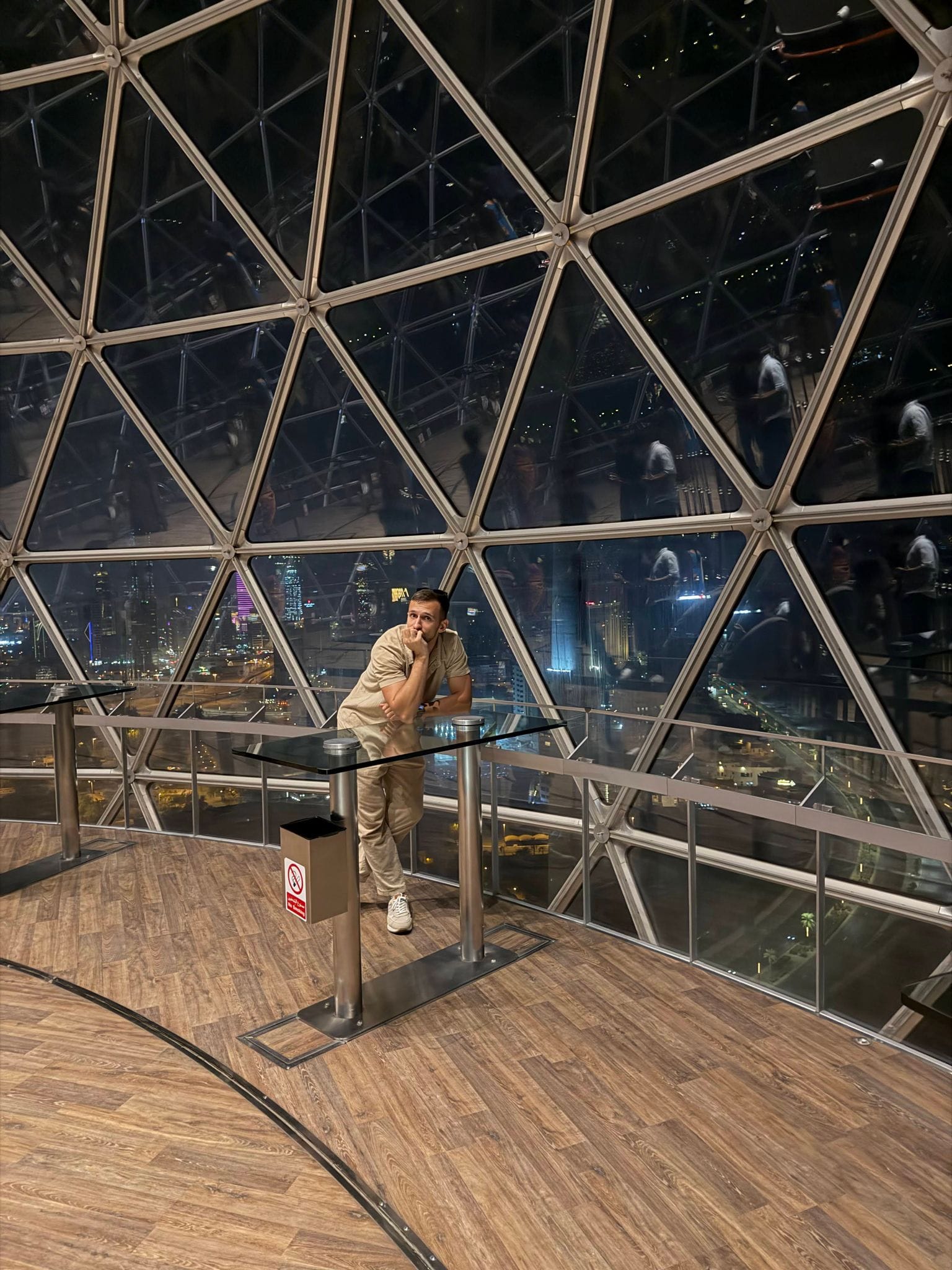
After the interview we didn't really say goodbye. We went up into the viewing sphere of the main tower together, and from there the evening just continued.
4,000 years of history, and seven months of occupation
I was very curious about Kuwait's history, and Ahmed told me a lot of it. I checked the details afterwards.
The oldest layer is on Failaka Island, off the coast: it was an outpost of the Dilmun civilization from about 2000 BC, and in 2025 a Danish–Kuwaiti team found a Dilmun temple there about 4,000 years old. Dilmun's capital, though, was in Bahrain — my next stop, and I saw it the day after. Kuwait City itself is much younger: the town dates to the early 18th century, and the Al-Sabah family has ruled since about 1752. Then came oil, and with it the money you see everywhere today.
The part that hit me hardest is Iraq. Iraq claimed Kuwait as its own territory in the 1930s, and again in 1961 — just days after Kuwait's independence. On August 2, 1990, Iraq invaded. Within a month Kuwait was declared Iraq's 19th province. It was liberated on February 26–27, 1991, after the Gulf War, almost exactly seven months later. On the way out, Iraqi troops set fire to more than 600 oil wells; the last one was put out only in November 1991.
As a Ukrainian, I know this story too well: a bigger neighbour decides that your country is really a part of theirs, sends in the army and "annexes" it on paper. Kuwait got its country back in seven months.
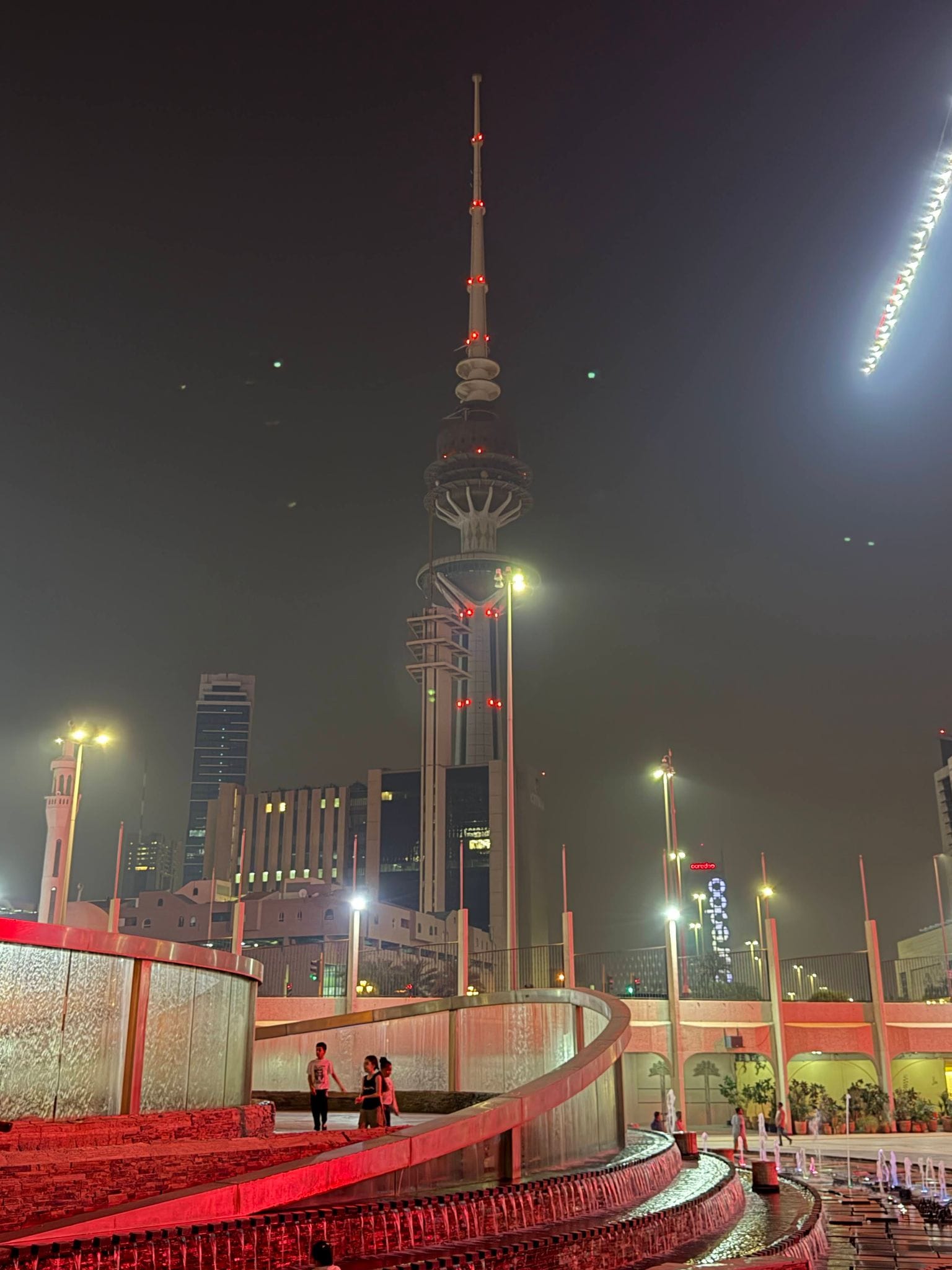
The war left a mark on the skyline too. Liberation Tower, 372 m, was being built as a telecommunications tower when Iraq invaded, and construction stopped. It was finished in 1993 and named after the liberation. We walked past it late in the evening.
Kuwait in 2026
Kuwait is in a war again this year. The 2026 Iran war started on February 28, and Iranian strikes hit Kuwait International Airport and Port Shuaiba. Almost all of Kuwait's oil leaves through the Strait of Hormuz, and Kuwait has no pipeline around it: when Iran closed the strait, Kuwait declared force majeure and reportedly exported no crude at all in April — the first time since the Gulf War. Exports partly came back later through ship-to-ship transfers. Even my flight from Baku took the long way around Iran.
Souq Al-Mubarakiya and Freej Swaeleh
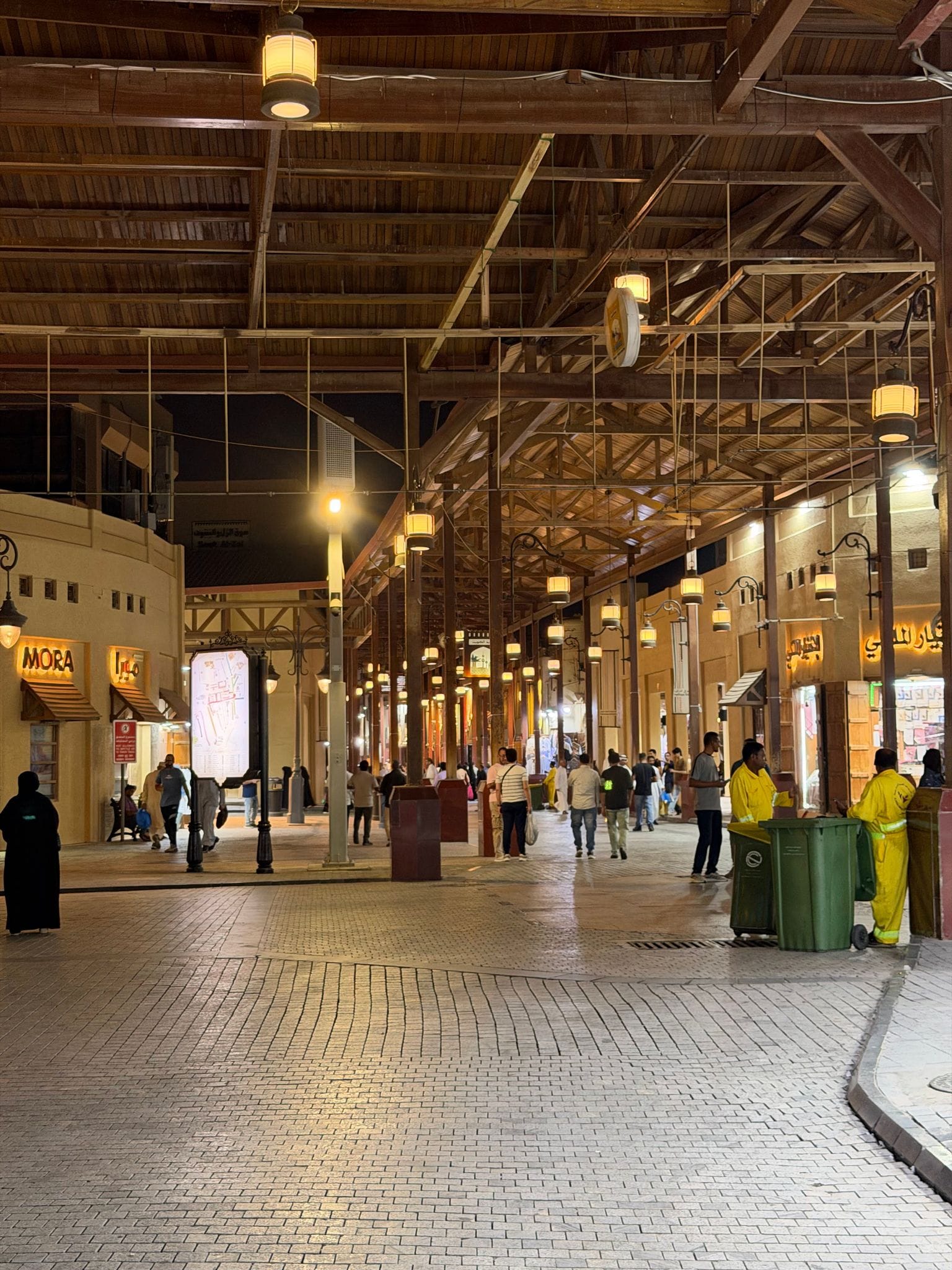
Ahmed took me to Souq Al-Mubarakiya, the oldest and best-known traditional market in Kuwait — over a century old. It's close to the Grand Mosque, which we never actually reached. I bought a few souvenirs there.
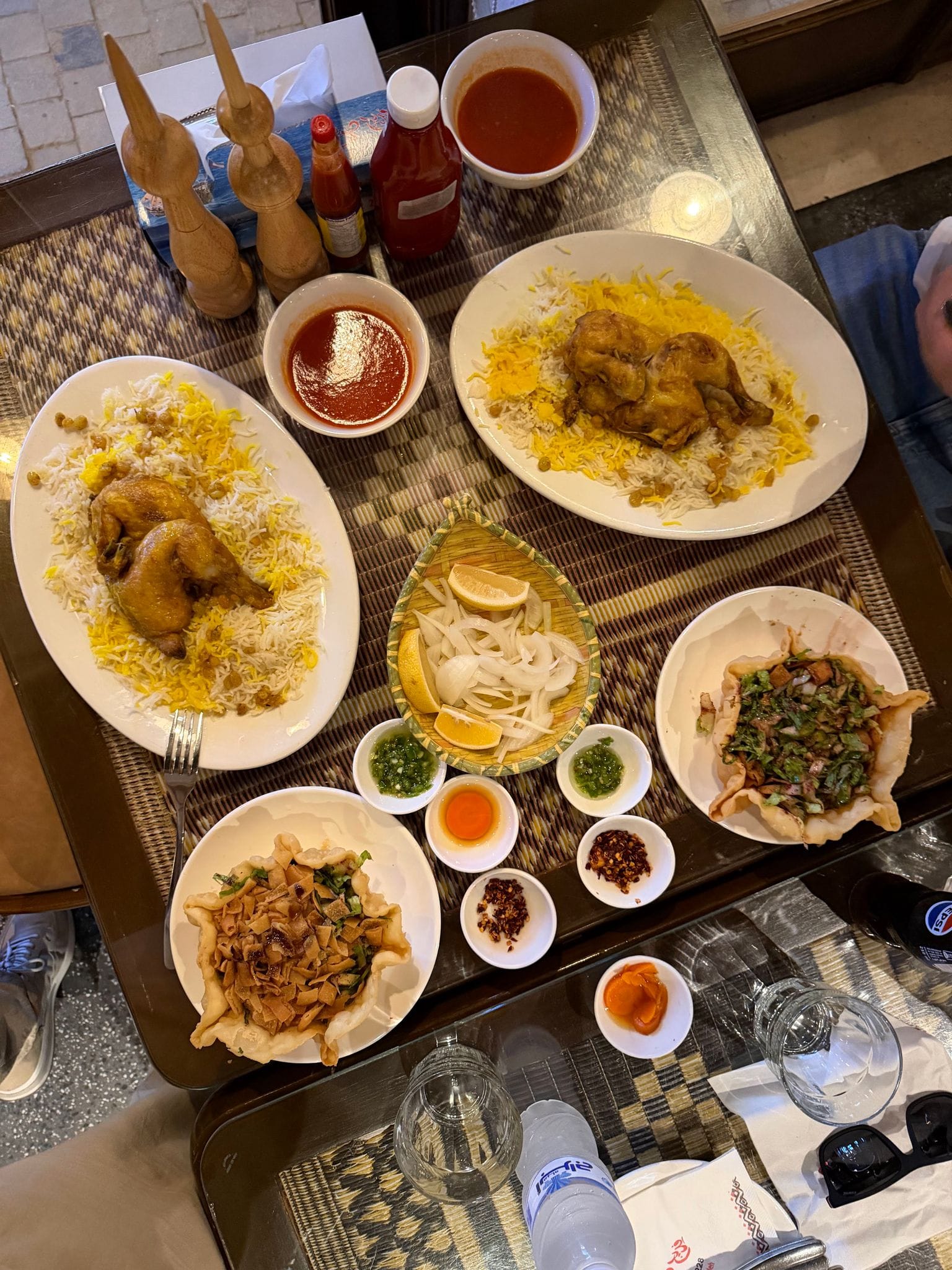
Then he took me to eat at Freej Swaeleh in the souq — a small chain serving traditional Kuwaiti food, known for machboos, spiced rice with chicken, lamb or fish. Authentic place, very tasty, and my favorite place of the whole Kuwait stop. In my Instagram story I called it "food of GODS", and I stand by that.
Arabic coffee: my new favorite drink
I've been to Qatar, the UAE and Oman before, and somehow I had never tried their coffee. At Freej Swaeleh I did, and it was a real discovery.
Arabic coffee, gahwa, doesn't taste like the coffee we drink at home. It's something else that just happens to be called coffee. The beans are roasted very lightly, so the drink comes out pale, greenish-gold, and it's flavored with cardamom and often saffron. A man stands at the stove next to a row of brass pots, the dallah, and pours it into small cups without handles, only partly filled.
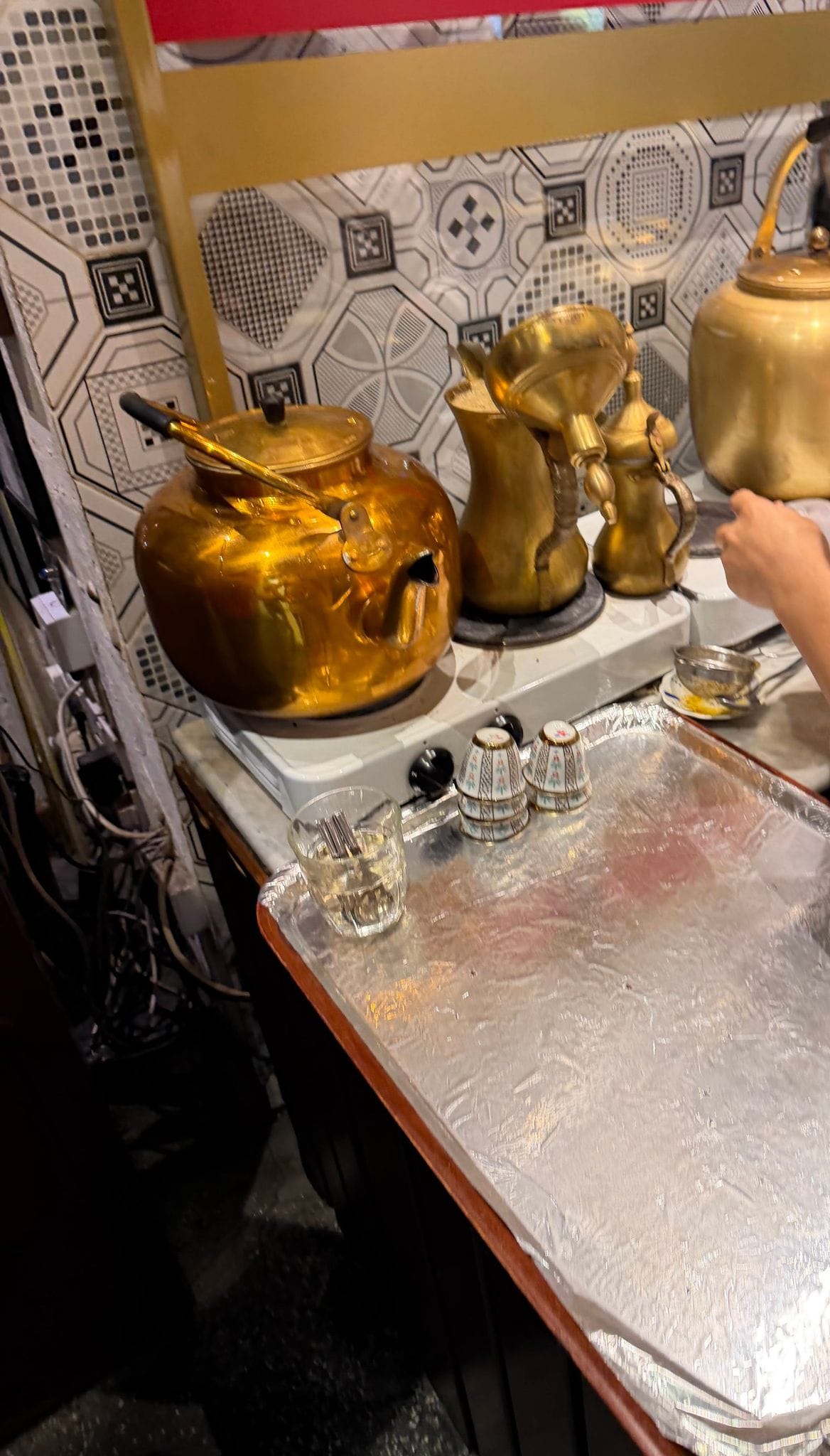
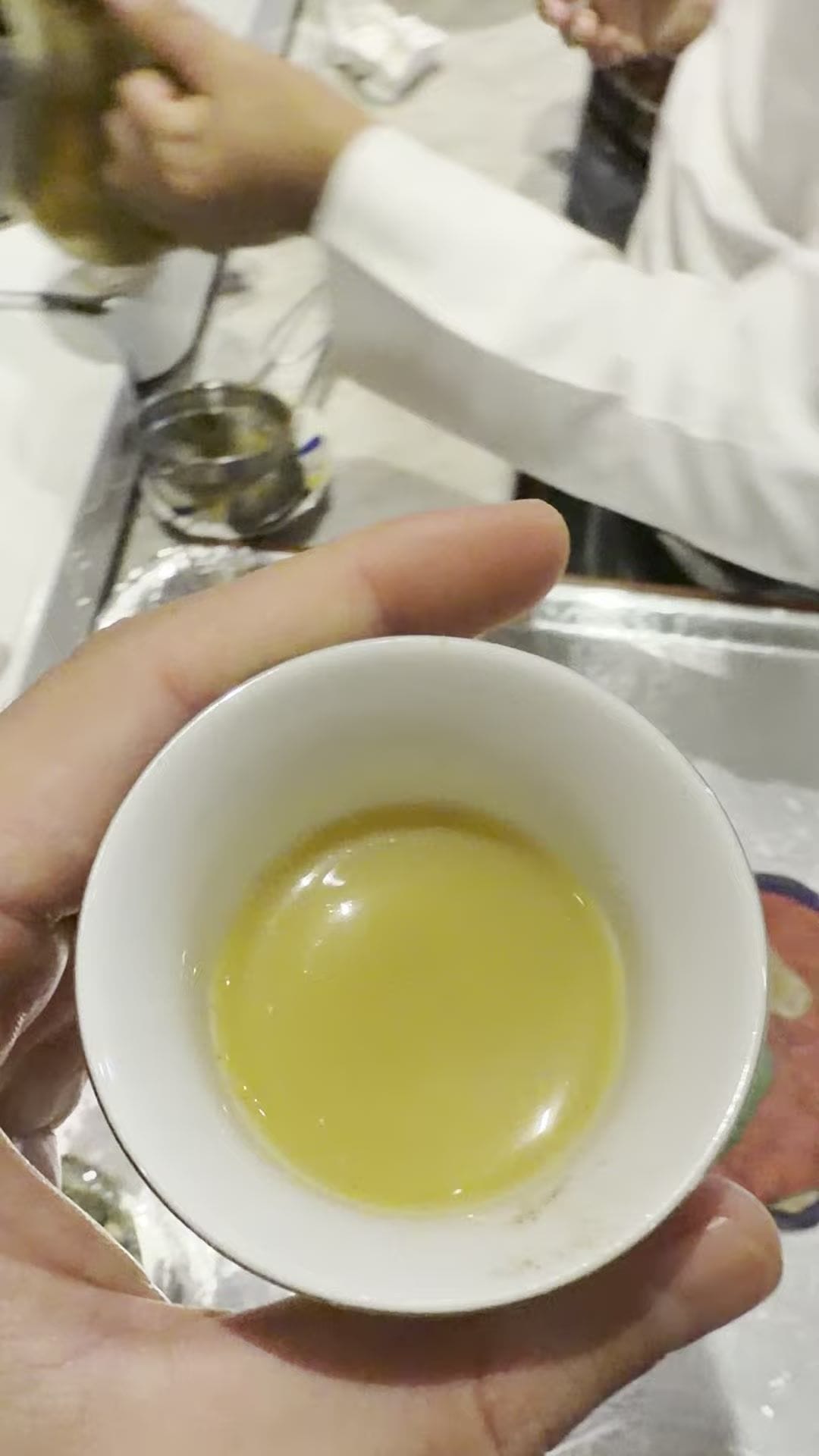
Ahmed taught me the custom that goes with it. You don't say anything: you just hold out your cup, and the man with the dallah fills it. When you've had enough, you give the cup a little shake from side to side, and he takes it away. No words needed at all.
I posted "I have a new favorite drink" that evening. Fun fact: UNESCO lists Arabic coffee as intangible cultural heritage of the UAE, Saudi Arabia, Oman, Qatar and Jordan. Kuwait isn't on that list, which you would never guess at Freej Swaeleh.
How people get married
Ahmed also told me about local customs, including how people find a partner. Traditionally, families are deeply involved: the couple is often introduced through family, and the man proposes to the bride's family.
I had heard a version of this before, in the UAE, as "the groom buys his wife from her parents". That's not quite right. The groom pays a mahr, and in Islamic law it belongs to the bride herself, not her family, although families often negotiate the amount. Kuwait Times reports typical amounts of about KD 4,000–8,000 ($13,000–26,000). The state helps too: a Kuwaiti man marrying a Kuwaiti woman gets KD 6,000, a third of it as a grant and the rest as an interest-free loan.
Card only, above a certain amount
At the souq I wanted to buy a souvenir for something like KD 10–20 (I don't remember exactly; that's $30–60), and the seller said that above a certain amount he could only take a card. It was explained to me as an anti-money-laundering rule. I was a bit skeptical, so I checked.
There is something to it. In February 2026 the FATF put Kuwait on its "grey list" of countries with weak anti-money-laundering controls, and Kuwait has been banning cash above KD 10 in more and more sectors since then: health clinics, salons, sports clubs and pest control from April, all private healthcare from July. Gold, precious stones and precious metals can't be paid in cash at all, and real estate joined that list in September. I found no rule for souvenir shops in general, so I'm not sure the seller had to refuse my cash. Maybe what he sold counts as one of those sectors, or he just played it safe.
The airport bus nobody takes
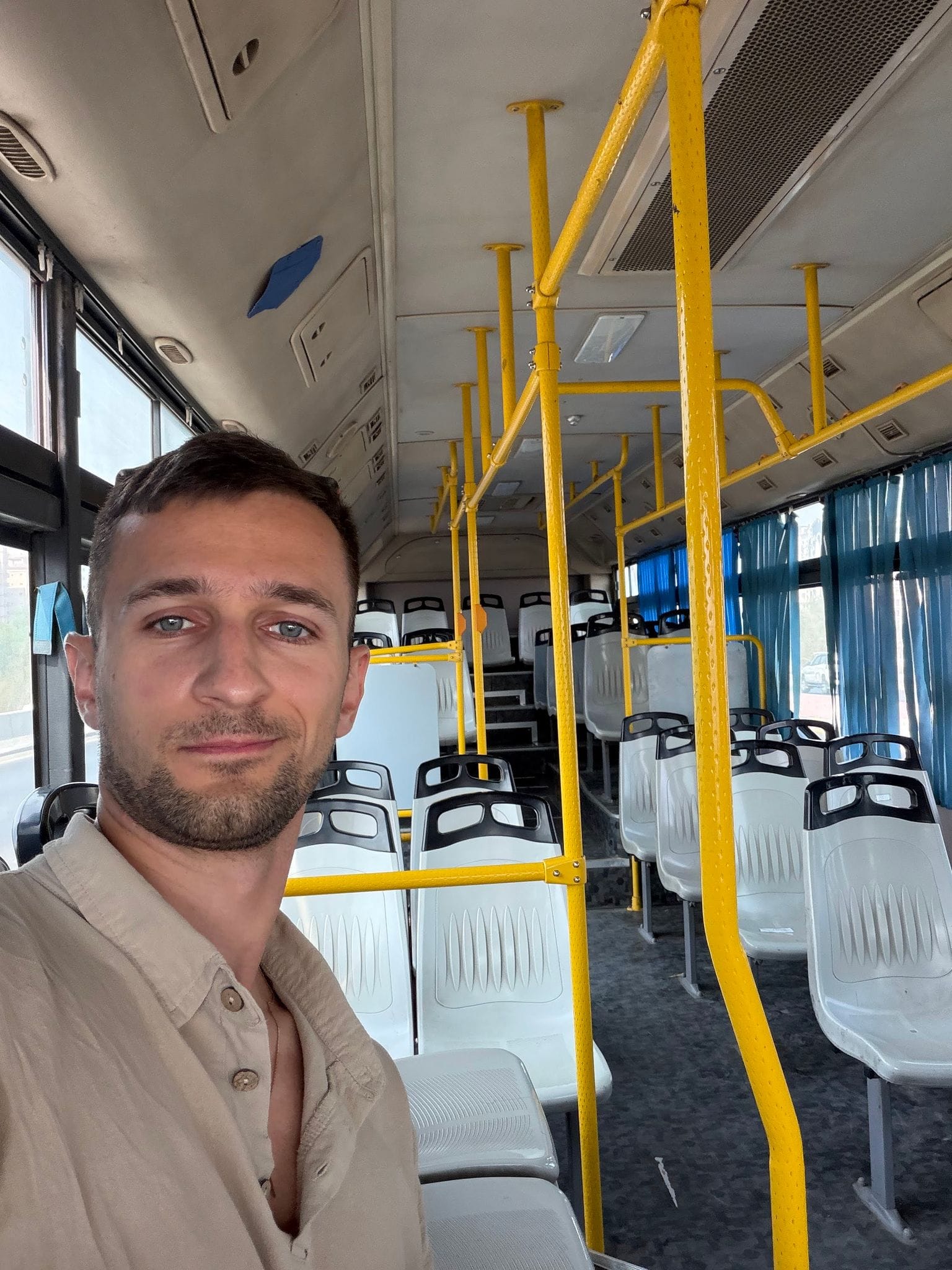
The next morning I decided not to take a taxi to the airport. The bus is about ten times cheaper: my ticket cost KD 0.250, about $0.80.
Google Maps found me a bus. The bus never came. Locals at the stop told me I needed a different one, so I got on a bus going towards the center. The driver didn't speak English, only Arabic, but he made it clear this one would do and that someone would tell me where to change. Then the passengers took over: several people started actively helping me figure out how to get to the airport. It was really nice. I had the feeling that locals were genuinely happy to see a tourist like me.
But before helping, the first thing they asked was: "Why not a taxi?"
It's a fair question. Kuwait City is a city for cars, and almost everyone gets around by taxi or their own car.
I had my reasons. No taxi app worked for me. I tried to register in Careem at the airport, but the SMS code never reached my phone. A second app wouldn't even let me pick my Polish or Ukrainian number. I had mobile internet and still couldn't order a car. Weirdly, Careem registered fine later on the trip, so the problem was specific to Kuwait. Uber, by the way, only launched in Kuwait in September 2026. And I don't like hailing a taxi on the street, because you usually have to haggle.
So I took the bus, route 13G in the end, and made it. By the last stretch nobody else was on board, just me and the driver, who simply drove me to the airport. Apparently, taking a bus to Kuwait airport really is unpopular. I almost missed it, too: Google Maps showing outdated routes happens in some countries, but I wasn't ready for it in Kuwait.
Practical Notes
- eVisa: I applied on the official Kuwait eVisa site a week before the trip and paid 10 KWD (about $32); it came through within a day. The airline checked the printout at the counter before issuing the boarding pass.
- Weekend: Friday and Saturday. Kuwait works Sunday to Thursday.
- Taxi apps: set up Careem or Uber before you arrive. In Kuwait, my verification SMS never arrived.
- Bus to the airport: a Mowasalat ticket costs KD 0.250. Don't trust Google Maps blindly — ask locals and the driver, they will help.
- Money: 1 KD is about $3.2, so prices that look small aren't. Have a card ready: more and more payments above KD 10 are card-only.
- Airport terminals: Kuwait Airways uses Terminal 4, Jazeera Airways Terminal 5. My flight to Bahrain left from T4.
- Lounge: Al Mubarakiya Lounge, free with DragonPass.
- Hotel: I stayed two nights at the ibis Sharq — a really good hotel with a great view from the room.
The ibis breakfast was good too, and I didn't skip it. That was a mistake: a few hours later I had a second breakfast in the airport lounge. I should have slept longer :)
Related posts
- Road to 90: Azerbaijan, Kuwait, Bahrain and Armenia in 8 DaysOct 14, 2026
- Manama, Bahrain: a 4,000-Year-Old Fort and Navratri in the Souq — Country #89Oct 17, 2026Manama, Bahrain
- Climbing Mt. Fuji: Subashiri Up, Yoshida Down (2026 Guide)Aug 17, 2026Mount Fuji, Japan
- Kyoto and Tokyo in a Week — Japan, Country #85Aug 14, 2026Kyoto & Tokyo, Japan