
My Talk at Kraków Tech Mixer #3: Find Traffic First, the Product Idea Will Follow
$500 of Google Ads brought me 20–30 leads. One Hacker News post of my article, which I didn't even submit myself, brought over 100 waitlist signups. That pair of numbers is pretty much the whole idea of the talk I gave on November 5 at Kraków Tech Mixer #3: find where the traffic is first, and the product idea will find you.
The event was organized by VUS, a tech community of Ukrainians abroad, in the Hevre bar in Kraków. I was the first of three speakers, next to Bohdan Zahriia and Oleksandr Yashchuk, plus a talk from the general partner, Fundacja Rozwoju Przedsiębiorczości Twój StartUP. It was my second time on a VUS stage after the AI panel a year ago, also in Kraków. The full recording is at the top of this post: 26 minutes, in Ukrainian with English subtitles.
Who was in the room
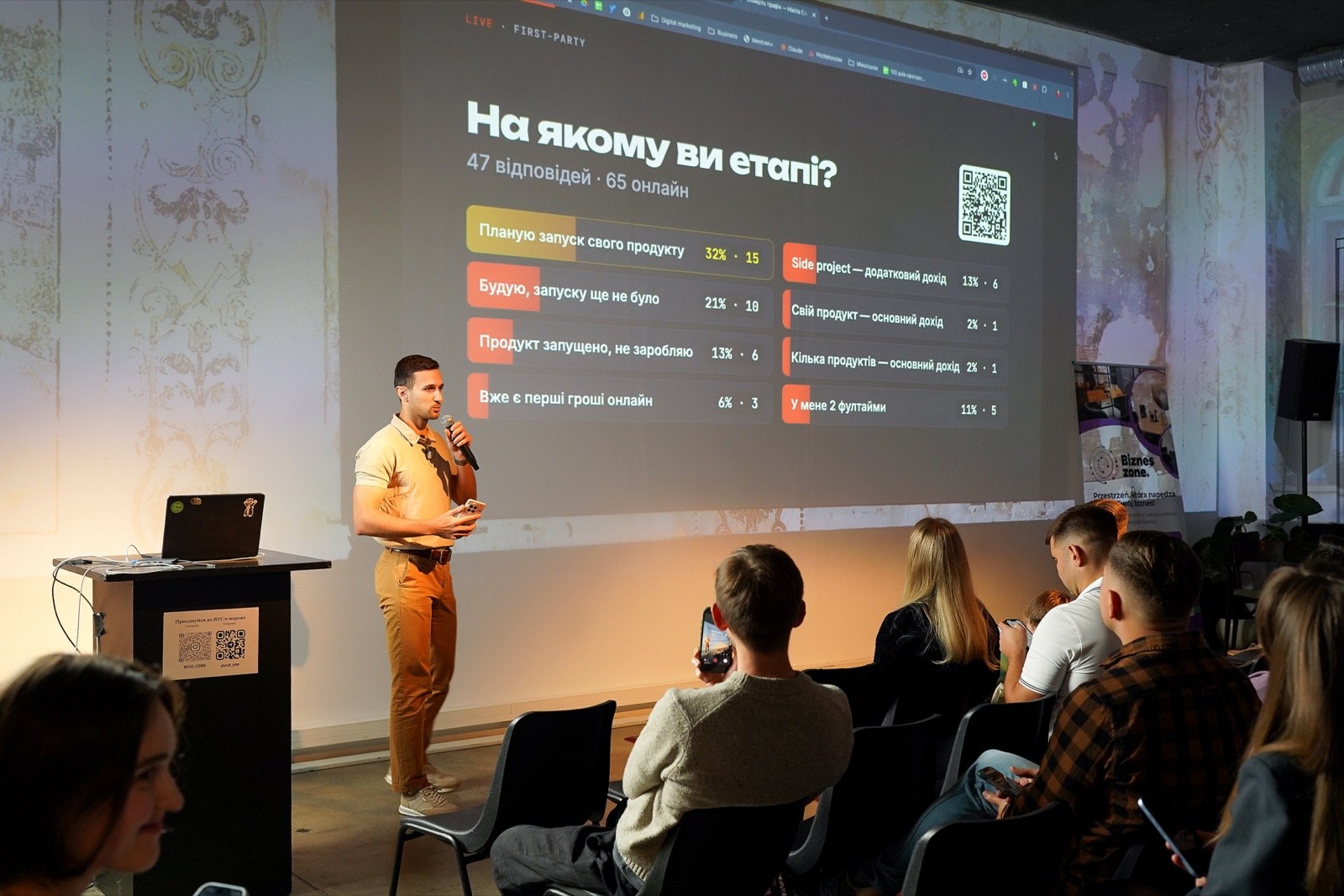
Over 100 people came. Before the main part, I asked everyone to scan a QR code: the slides were a web page I built for this talk, and phones in the room could vote in polls and send questions while I spoke.

Guess how many of the 57 people who voted already lived off their own products? 2. The biggest group, 32%, were planning to launch a product, and another 21% were building one that hadn't launched yet. So most of the room was exactly at the point where the question "where will the users come from?" still costs nothing to answer.
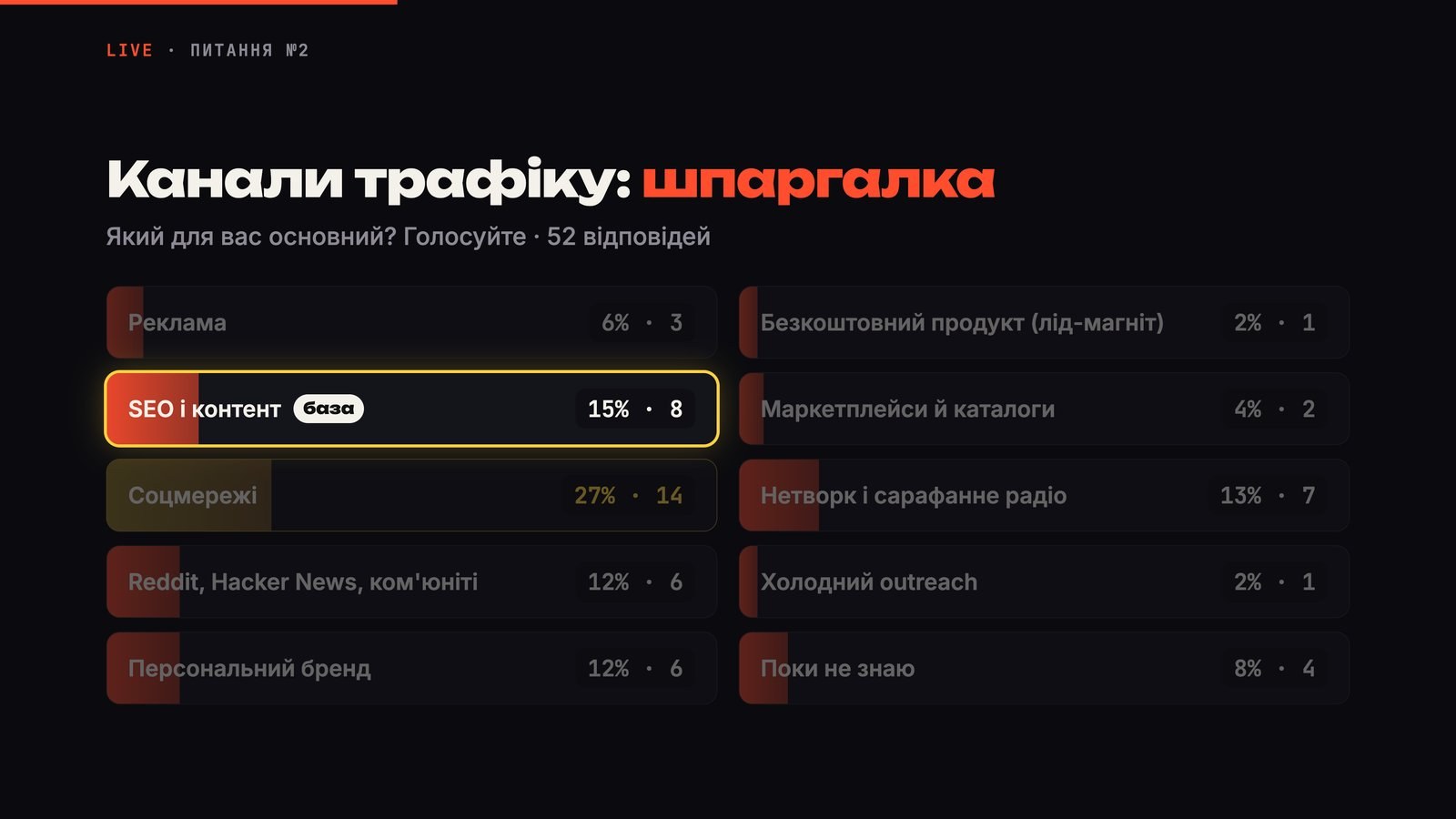
When I asked about their main traffic channel, social media won with 27%. Ads got 6%. On the slide, I marked SEO and content as the base, and only 15% of the room picked it:
What I talked about
Three products, and what each of them taught me about traffic.
DataUnlocker started from an old article. I wrote a technical article for freeCodeCamp, forgot about it for two years, and then noticed it was still read 60–80 times a day. So I added a short TL;DR about the product I was planning on top of it. 15–20 people a day clicked through, and 2–4 left their email. By launch, the waitlist had 150 people, and about 20% of them paid. A waitlist alone isn't enough. You need a traffic channel that already works.
Pricing from one quote is a mistake. My first client was freeCodeCamp. Its CEO said he'd probably pay $30 a month for the product, and I priced it around that phrase. At their scale, with millions of users a month, the numbers didn't add up. In DataUnlocker 2.0 I priced from unit economics instead, and nobody bargained. The only question clients asked was whether it would really work. Before that, I spent about 18 months building 2.0 full-time. That one got a slide of its own, titled "Never do this".
AfterPack got its waitlist from Hacker News. When Claude Code's source made the news, I quickly wrote an article on the AfterPack blog. Nobody reacted. Then someone else posted the same link to Hacker News: 36 points and over 100 people on the waitlist. Compare that to the 20–30 leads from $500 of Google Ads, who weren't keen to convert. For B2B, ads are a very cold channel.
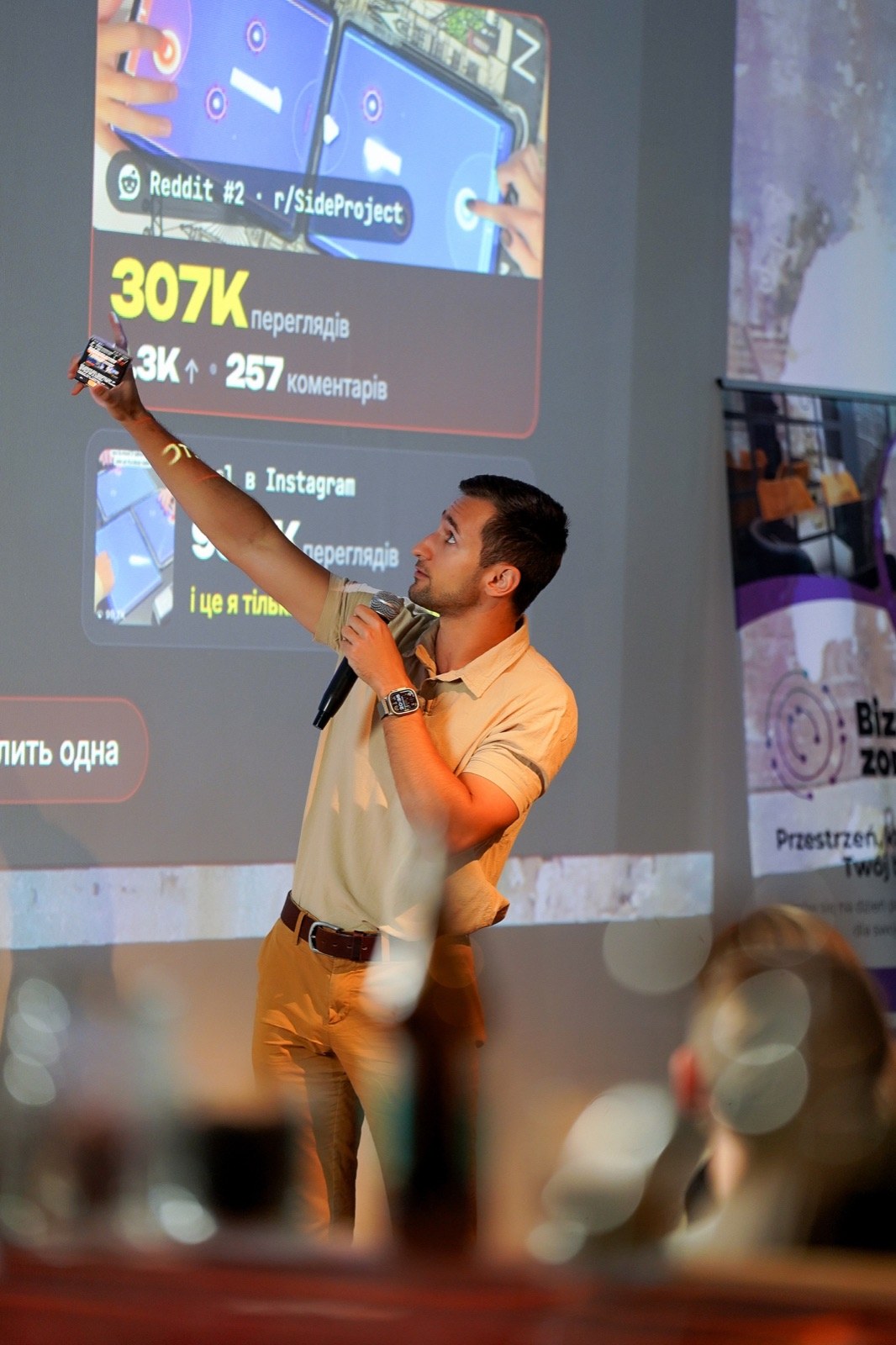
BIGBOARD.GAMES took 7 days to build as an experiment. Two Reddit posts brought about 2,000 users, and the second one, in r/SideProject, reached 307K views.
The last part was about what I'm doing now. I write an article, check whether people read it, and only then think about a product. My article about Google deleting 10 years of my Timeline is read by people who clicked a source link in an LLM answer. That's hot traffic, and a demand signal at the same time. I asked the room what product I could build on it: 4 of the 6 people who voted picked a backup service for personal data. Only 6 votes, because the poll was on the second-to-last slide :)
How I made the slides
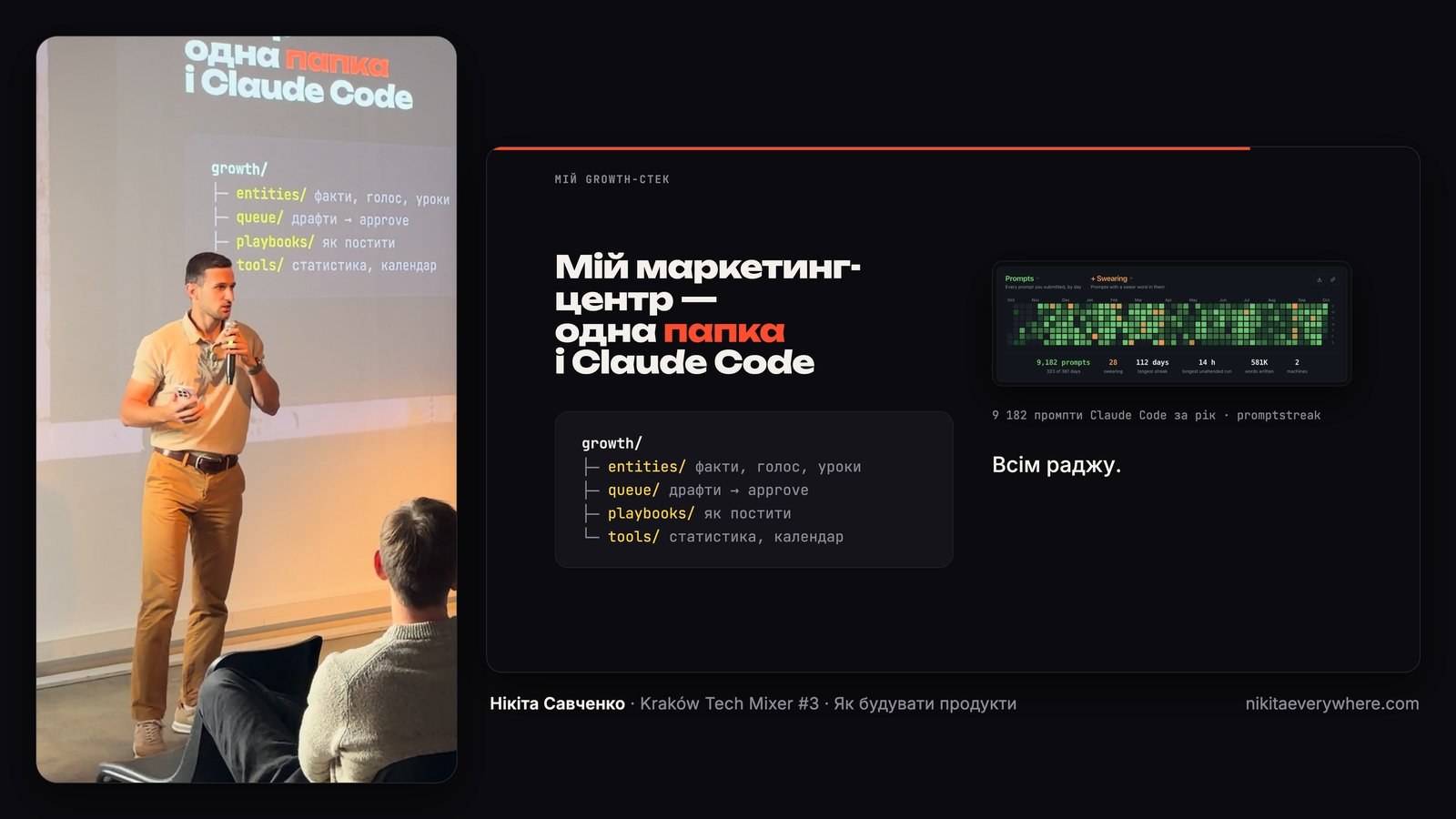
Claude made the deck in a few prompts (and many more to polish it). It works from one folder where I keep everything about my products: facts, voice, lessons, drafts and stats. The same setup cut this talk into six short reels and the video above. For many people it won't literally be one folder: their context lives in Notion, a CRM, analytics and a dozen other tools. But it can still be one place with the instructions, where the tools plug in through MCP, APIs or whatever access they offer. For me, it removed most of the preparation work.
Thanks to VUS for the invitation and to everyone who came and asked questions. The audience asked how I convinced users to move to the new version of a product, and whether I insert links into existing articles. The answers are at the end of the recording.